On June 25, 2026, the United States Supreme Court handed Bayer and Monsanto one of the most significant legal victories in the history of pesticide litigation.
The ruling has been reported widely as an American legal story. But is it?
John Durnell: The Farmer Whose Cancer Claim the Supreme Court Blocked
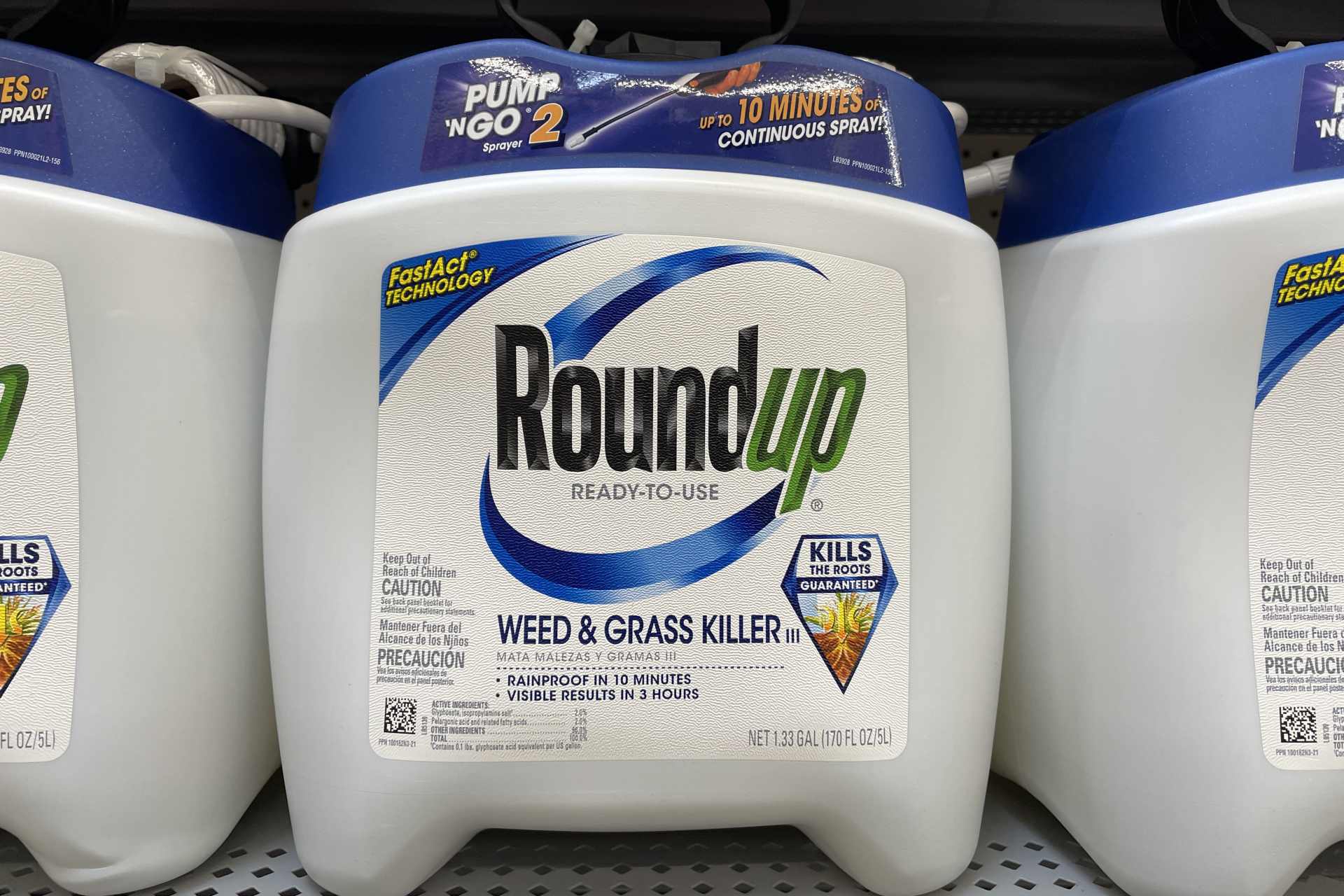
John Durnell is a Missouri farmer. He used Roundup for decades — the way farmers do, the way they were told was safe, the way the label said was fine.
He developed non-Hodgkin lymphoma.
He sued Monsanto for failing to warn him that the product he had been applying to his land, season after season, might cause cancer. A jury of his peers heard the evidence and found in his favour, awarding him $1.25 million in damages.
Then the Supreme Court of the United States took the case — and reversed it.
What happened next is worth understanding carefully. Because the legal mechanism the court used to dismiss John Durnell’s claim does not stop at the US border.
FIFRA Preemption: How a Pesticide Label Became a Legal Shield
The core of the ruling rests on a federal law called the Federal Insecticide, Fungicide, and Rodenticide Act — FIFRA. Under FIFRA, the US Environmental Protection Agency must approve the label of every pesticide sold in the United States. Monsanto’s Roundup label has been approved repeatedly, without a cancer warning.
The Supreme Court’s logic, in a 7-2 decision authored by Justice Brett Kavanaugh, follows from there. Federal law requires Monsanto to sell Roundup with the EPA-approved label. A state cannot impose labelling requirements that are “in addition to or different from” what federal law requires. John Durnell’s failure-to-warn claim would have required Monsanto to add a cancer warning the EPA had not required.
Therefore, the claim is preempted. Blocked. Legally irrelevant — regardless of what a jury decided.
The question this raises is a simple one: who decided that the EPA’s label approval should be the final word on what is safe?
Not scientists. Not courts. Not juries who heard the evidence. Congress did — when it wrote FIFRA. And the Supreme Court has now made that hierarchy explicit and binding.
What the Monsanto Ruling Does and Doesn’t Block: Thousands of Cases Affected
It is worth being precise here. The ruling does not end all Roundup litigation. Claims based on design defect, negligent manufacturing, or advertising representations that go beyond the label remain viable.
But failure-to-warn claims — which form the backbone of tens of thousands of pending cases — are now effectively blocked. Bayer stated the ruling “should result in the dismissal of current warning-based claims and bar future failure-to-warn claims.”
For the people whose cases rested on the straightforward argument that they were never warned of a risk that later gave them cancer, the courthouse door has been closed.
The question worth sitting with is this: what recourse remains for someone harmed by a product whose regulator chose not to require a warning?
The Supreme Court Dissent: Who Pushed Back and Why It Matters
The ruling was not unanimous. Justice Ketanji Brown Jackson, joined by Justice Neil Gorsuch, dissented — and her language was pointed.
She argued that the majority had read into FIFRA a labelling requirement that does not exist, and that the effect of the majority’s interpretation was both remarkable and regrettable — closing the courthouse doors to state tort plaintiffs like Durnell without legal justification.
There is something else worth noting about the litigation that the ruling now curtails. It was precisely through state court proceedings that the Monsanto Papers emerged — internal company documents revealing sustained efforts to manage the scientific record, ghostwrite studies published under independent academics’ names, and suppress internal awareness of safety concerns.
The question that raises itself is uncomfortable: if the litigation that uncovered those documents had never been allowed to proceed, would the public know what it knows today?
Is the Global Consensus on Glyphosate Safety as Settled as the Court Claims?
In his majority opinion, Justice Kavanaugh pointed to international regulatory agreement as partial justification for the ruling — noting that the EPA’s assessment that glyphosate is not likely to cause cancer is shared by many other regulatory bodies around the world, specifically naming Canada, Australia, Japan, and the European Union.
New Zealand was not named. But our regulators draw from the same underlying assessment framework — which raises a question of its own: if the court used international consensus as justification for shielding Monsanto from liability, and New Zealand is part of that consensus, what does that mean for us?
That framing deserves scrutiny.
The European Union renewed its approval of glyphosate in 2023 — but for 10 years, not the maximum 15, specifically to allow earlier reconsideration of the large and growing body of research. The renewal itself was deeply contested. EU member states failed to reach a qualified majority either for or against renewal at two successive votes. The European Commission acted unilaterally because no democratic consensus could be formed.
And the science has not stood still since. In June 2025, the European Commission requested EFSA and ECHA to evaluate new carcinogenicity data from the Global Glyphosate Study conducted by Italy’s Ramazzini Institute. In December 2025, EFSA and ECHA met with the Institute’s researchers to discuss those findings. That review is ongoing.
This is the regulatory picture Justice Kavanaugh described as settled consensus.
The question is whether it is. If international agreement on glyphosate’s safety is as solid as the ruling implies, why is Europe actively re-examining the science it approved just two years ago?
Glyphosate Exposure Risk: Farmworkers, Groundskeepers, Orchardists and Home Gardeners
Before we discuss what this means for New Zealand’s regulators, it is worth pausing on something more immediate.
John Durnell was a farmer. He used Roundup the way it was designed to be used, following the label, trusting the system.
He is not alone in that.
Every groundskeeper maintaining a school field. Every orchard worker moving through rows of trees in the spray season. Every council contractor managing roadside vegetation. Every home gardener reaching for the familiar orange bottle on a Saturday morning. Every farm worker who has spent years applying product to land without being told there was any reason not to.
The growing body of evidence linking glyphosate to non-Hodgkin lymphoma, to Parkinson’s disease, to gut microbiome disruption, to neurological harm — that evidence did not disappear on June 25, 2026. What disappeared was one of the primary legal mechanisms through which people harmed by that exposure could seek accountability.
Where there is smoke, it is reasonable to ask where the fire is. It is also reasonable to ask who benefits when the question is no longer allowed to be asked in court.
How the Monsanto Ruling Affects New Zealand’s Glyphosate Regulation
New Zealand is not subject to United States Supreme Court rulings. Our legal system is separate. MPI and the EPA New Zealand make their own determinations.
But those determinations do not emerge in a vacuum.
The safety assessments our regulators rely on when approving glyphosate and setting exposure limits draw substantially from the same underlying EPA evaluations that the Supreme Court has now treated as legally definitive. If those determinations become further entrenched internationally as a result of this ruling — harder to challenge, more costly to diverge from — what does that mean for New Zealand’s ability to take an independent position?
We have previously asked whether New Zealand should follow Canada in continuously monitoring new glyphosate evidence as it emerges. We have documented that France and Italy, and more recently Germany, according to some European reporting, have recognised Parkinson’s disease as an occupational condition linked to pesticide exposure, while New Zealand has no equivalent programme, no recognition, and no plan.
The Durnell ruling does not change New Zealand law. But it changes the landscape in which that law operates. It signals to the global agrichemical industry that the pathway to permanent protection from accountability runs through regulatory approval — not through science.
The question for New Zealand’s regulators is a straightforward one: are you watching? And if so, what are you doing about what you see?
Glyphosate, Politics and Corporate Liability: Who Does the Regulatory System Protect?
There is a political dimension to this ruling that should not be overlooked.
In February 2026, President Trump invoked the Defence Production Act to guarantee the domestic supply of glyphosate-based herbicides, declaring it “central to American economic and national security.” The US government then appeared before the Supreme Court — and sided with Monsanto.
In the same season, the 2026 Farm Bill proposals included a liability shield provision that would grant chemical companies de facto immunity from lawsuits.
This is not a neutral regulatory picture. It is a politically shaped one, in which the manufacturer, the regulator, and the government have aligned — and the farmer with cancer lost.
The question is not whether New Zealand should follow America’s lead.
The question is whether we are already following it — without anyone having made that choice deliberately.
Further Reading
This article builds on more than a year of coverage from No More Glyphosate NZ. If you want to go deeper on any of the threads raised here, these pieces are a good place to start.
Before the ruling landed, we examined what was at stake in Roundup Warning Label Lawsuit: What the US Supreme Court Ruling Means for New Zealand — an article that, in retrospect, anticipated the outcome with uncomfortable accuracy.
On the question of what New Zealand’s regulators are and aren’t doing, If Canada Can Continuously Monitor Glyphosate, Why Can’t New Zealand? and Who Holds Regulators Accountable When the Science Changes? remain essential reading.
On the health risks that sit behind the legal arguments, Glyphosate and Parkinson’s Disease: Is New Zealand Asking the Right Questions? documents the gap between what other countries have recognised and what New Zealand has not.
And on the question of whether the science underpinning regulatory approval is as robust as we are told, Glyphosate Safety and Flawed Animal Studies: What NZ Regulators Aren’t Telling You goes to the heart of the evidentiary foundation on which these decisions rest.
No More Glyphosate NZ is a citizen-led campaign demanding safer food, cleaner soil, and honest regulation in New Zealand. If this article raised questions for you, sign up for our newsletter or support our independent testing programme.
Image Source & Attribution
We’re grateful to the talented photographers and designers whose work enhances our content. The feature image on this page is by madvideos.gmail.com.