As part of the No More Glyphosate NZ Council Herbicide Transparency Project, we asked councils across New Zealand about herbicide use in public spaces, the products being used, the policies governing their use, and whether those practices have been formally reviewed.
Queenstown Lakes District Council (QLDC) provided a detailed written response prepared following consultation with its Parks Service Delivery Team, Roading Operations and Contracts Team, and external contractor Delta. The council identified the herbicide products currently used, explained where they are generally applied, described the methods used to apply them, and outlined the operational approach taken when managing herbicide use.
The council also supplied a Contractor Agrichemical Usage Report covering applications undertaken between 21 August 2023 and 8 April 2026. The response confirmed that QLDC does not currently have a standalone spray policy, does not provide advance public notification of spraying, is not trialling non-chemical alternatives, and has not undertaken a recent review of its herbicide use or safety approach.
The council advised that spray use is minimised where practicable around playgrounds and other high-use public areas.
Quick Summary
| Topic | Response |
|---|---|
| Glyphosate-based herbicides used? | Yes |
| Other herbicides used? | Yes |
| Alternative non-chemical methods trialled? | No |
| Product list supplied? | Yes |
| Herbicide policy supplied? | No |
| SOP supplied? | No |
| Application locations identified? | Yes |
| Application frequency explained? | Yes |
| Public notification mentioned? | Yes |
| Chemically sensitive register? | Not mentioned |
| Formal review identified? | No |
| Supporting documents supplied? | Yes – Contractor Agrichemical Usage Report |
What We Learned
QLDC advised that herbicides are used across a range of public spaces associated with the district’s road network and public pathways. These include road verges, areas around edge marker posts, culverts, stormwater channels, public pathways, and locations requiring noxious weed, moss, or mould control.
Applications are carried out using boom spray arms, ute spray guns, knapsack sprayers, spot application methods, and direct gel application.
The council stated that treatment frequency depends on seasonal growth and the effectiveness of previous applications, with most areas generally treated two to three times each year.
The response also confirmed that herbicide use is guided by product manufacturer instructions and industry best practice, with particular care taken around playgrounds and other heavily used public areas.
Products Identified
| Product | Type / Active Ingredient | Notes |
|---|---|---|
| Glyphosate | Glyphosate herbicide | General weed control |
| Tordon XT | Herbicide (Picloram + Triclopyr) | Used for selected weed control |
| Agri Oil | Spray adjuvant/crop oil | Used with herbicide applications |
| Meturon | Herbicide (active ingredient not specified by council) | Weed control |
| Surrender Moss Killer | Moss control product | Moss and mould management |
| Codacide | Vegetable oil-based spray adjuvant | Used as an application aid |
Note: Active ingredients have been identified from publicly available product information where they were not explicitly stated in the council’s response.
Application Locations and Frequency
QLDC advised that herbicides are typically used for:
- Road verges
- Areas around edge marker posts
- Culverts
- Stormwater channels
- Public pathways
- Noxious weed control
- Moss and mould control
Applications are generally undertaken two to three times per year, depending on seasonal growth and how effective previous treatments have been.
The council also supplied a Contractor Agrichemical Usage Report covering the period 21 August 2023 to 8 April 2026, identifying individual treatment locations together with application dates.
Policies and Guidance
QLDC advised that herbicide use is undertaken in accordance with guidance provided by chemical suppliers, with an emphasis on ensuring products are applied at the correct concentrations for each task.
The council stated that decisions regarding herbicide use are guided by:
- Industry best practice
- Manufacturer label recommendations
- Chemical supplier guidance
QLDC confirmed that it does not currently have a specific Spray Policy governing herbicide use in public spaces.
The council also advised that extra care is taken in high-use public spaces, with spray use minimised where practicable around playgrounds and similar locations.
Public Notification and Chemically Sensitive Residents
QLDC advised that:
- Warning signs are displayed during herbicide spraying and remain in place for the period specified on the relevant product label.
- Pilot vehicles are used where required to improve the visibility of spraying operations.
- The council does not provide advance notification before herbicide spraying takes place.
- QLDC does not currently have standard notification procedures or requirements relating to herbicide spraying.
The response did not mention any chemically sensitive residents register.
Review History
QLDC confirmed that it has not undertaken any internal or independent review of herbicide use or safety in recent years.
The council further advised that no formal review date has been identified for its current approach.
Documents Provided
Queenstown Lakes District Council supplied:
- Contractor Agrichemical Usage Report
The Contractor Agrichemical Usage Report records herbicide and agrichemical applications undertaken between 21 August 2023 and 8 April 2026, including treatment locations and application dates.
Observations
Queenstown Lakes District Council provided a comprehensive written response that addressed each of the questions contained in the information request.
One notable aspect of the response is the distinction between operational guidance and formal governance. While the council explained that herbicide use follows supplier guidance, industry best practice, and manufacturer label recommendations, it also confirmed that it does not currently have a standalone spray policy governing herbicide use in public spaces.
The accompanying Contractor Agrichemical Usage Report also provides a level of operational detail not always supplied by councils participating in the project, documenting where herbicide applications occurred and when they were undertaken over an extended period.
The council also clearly stated that no formal review of herbicide use or safety has been undertaken in recent years and that no formal review date has been identified for the current approach.
Why This Matters
Councils manage a wide range of public spaces on behalf of their communities. Understanding what products are being used, where they are applied, and how decisions are made helps contribute to greater transparency around weed management in public areas.
The Council Transparency Project aims to build a nationwide public record of herbicide management practices across New Zealand local authorities so residents can better understand what is happening in their own communities.
Information Request Details
| Item | Details |
|---|---|
| LGOIMA Reference | LG26-0134 |
| Request Submitted | 04 May 2026 |
| Response Received | 26 May 2026 |
| Information Current | As supplied under LGOIMA on 26 May 2026 |
Image Source & Attribution
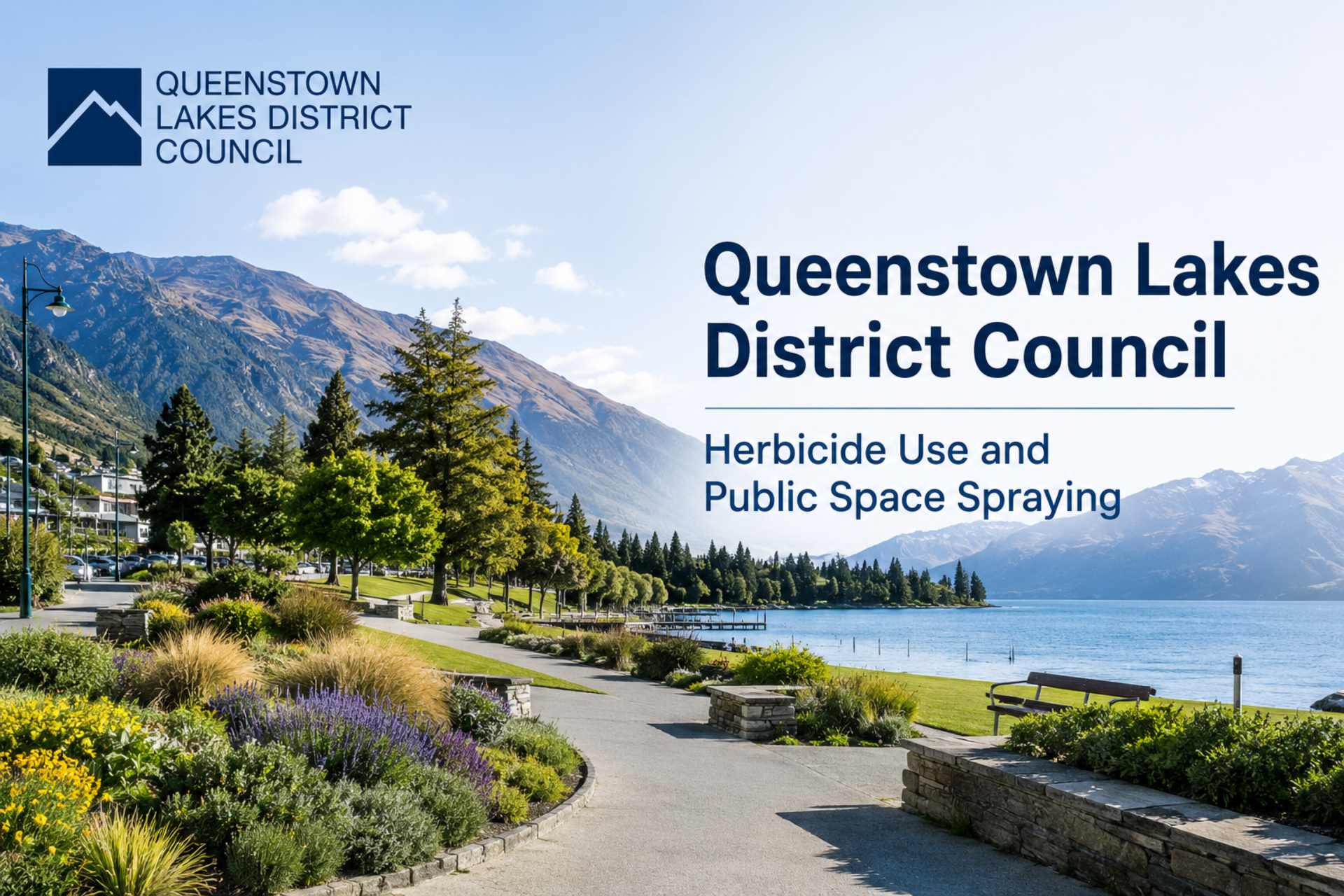
The feature image on this page was created using AI-assisted image generation from an original concept developed by No More Glyphosate NZ and refined for publication in Canva.
AI can be a useful tool, but it isn’t perfect. If you spot any inaccuracies in the features shown, please contact us and we’ll be happy to review and correct them where appropriate.