In 1991 I became seriously ill with symptoms that no one could explain.
Blood tests revealed nothing, and after weeks without answers, I was even referred to a psychologist. It would be some time before I discovered what I believe was the real cause of my illness. Looking back now, I can see that those events marked the beginning of a journey that would eventually change the way I thought about agrichemicals and, years later, the food I eat.
A Mystery Illness
In 1991 I got a teaching job at Tauhara College in Taupo, teaching maths and horticulture. The school had a plastic greenhouse which was used on a daily basis. At Easter that year I became ill with some unknown illness — intense headaches, my eyes felt like they were loose in their sockets, and I had absolutely no energy. My wife took me to the doctor, where I spent an hour in his consulting room. After lying on the bed there, it took me ten minutes just to put my shoes back on. He sent a blood sample away and had no idea what the problem was. The tests revealed nothing, and I was referred to a psychologist in Hamilton in case it was a mental issue.
I drove myself to Hamilton, parked the car, and waited to cross a main road at a light-controlled intersection. Trucks and cars were passing by, and I have a clear memory of thinking that they could not harm me — that I could just walk out and come to no harm. Fortunately the lights changed to stop the traffic before I could do that. I have no other recollection of the visit, but I “awoke” at home in front of the TV, which allowed me to focus my eyes in one place and reduce the pain a little.
For several weeks I went to school every second day to check on the greenhouse, but I didn’t improve and nothing was diagnosed. Eventually I decided I needed to resign so the students could have a proper teacher rather than relief teachers. On the day I went in to hand in my notice, I stopped first at the greenhouse to check on my belongings. It smelt very strongly of malathion insecticide. The next thing I remember was coming to at home in front of the TV. Apparently, according to other teachers I met later, I had handed in my notice, spent some time talking to staff who said I seemed strange, and then driven myself home. But I had found the culprit — malathion. I learned afterwards that the greenhouse had been sprayed with it the previous year, and being plastic, the chemical would have been absorbed into the lining and given off in minute doses each time I visited.
I came right slowly. Over the following two years I had two further relapses, each about a week long, from smelling malathion while visiting a spray storage area or a garden shop, and once from sitting in the sun eating lunch, unaware that an upwind neighbour had sprayed his garden that morning. I later had one more exposure when my wife bought some apples from a roadside stall; I was about three bites in when I felt the same familiar sensations behind my eyes. She phoned the grower, who confirmed the apples had been sprayed with chlorpyrifos — a stronger relative of malathion — though it was said to be outside the required withholding period. Even so, there was clearly still enough chemical in the fruit to affect me.
That experience reinforced something I had begun to suspect: not all agrichemicals simply sit on the surface of food waiting to be washed off. Some are absorbed into the plant itself. After all, why spray food with poisons to stop insects eating it, and then eat it yourself?
Pork, Chicken, and a Simple Experiment
Some years later I was working as a tour coach driver and guide, mostly for Asian student groups travelling to Rotorua and elsewhere in the North Island. The students were usually fed curried chicken and rice — a meal that invariably brought on diarrhoea for me. Because of this I was permitted to eat elsewhere, and my favourite option was a roast dinner restaurant, where I’d order roast pork. Interestingly, I still had diarrhoea after those meals.
Having a scientific background and an interest in medical research, I decided to test it properly. I switched those meals to roast beef instead — no diarrhoea. I went back to pork — diarrhoea returned. It was consistent. So I started asking what pork and chicken had in common that beef didn’t. Both are grain-fed, and I knew from a relative who drove trains through the Western Australian wheat fields that those crops were sprayed with glyphosate prior to harvest to dry the crop down and make harvest more uniform.
So I tried European pork, knowing glyphosate is banned in many EU countries — it was fine. I tried organic chicken — also fine. I moved on to organic bread, flour, and eggs, and my gut health improved markedly. That was how I came to the conclusion that my gut problems were connected to glyphosate in my food.
A Shrinking List of Safe Foods
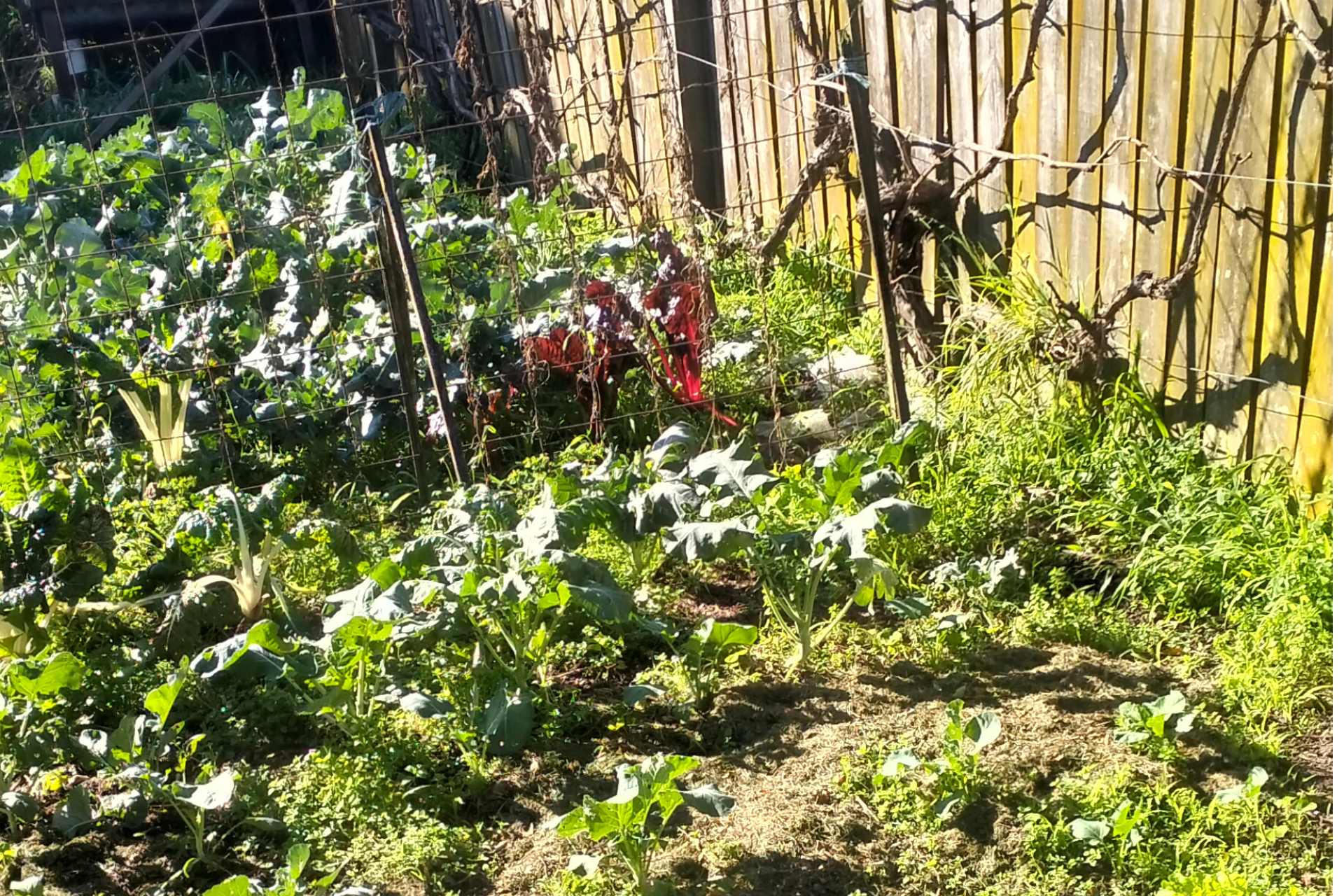
Today, I grow most of my own fruit and vegetables organically, which gives me confidence in what I’m eating. On our 1060 sqm residential property we’re more or less self-sufficient in produce — at the moment we’ve just harvested a year’s supply of kumara, and have boxes of persimmons, mandarins ripening on the tree, bananas, broccoli, silverbeet and lettuces.
Meat, eggs, and grain-based products are harder, because they depend on supply chains outside my control. Pork and chicken were my first two indicator meats — virtually all non-organically fed pork and chicken products cause a reaction, and that carries through to eggs and anything made with them, like cakes, which need organic eggs as well as organic flour. My assumption is that the grain-based feed given to pigs and hens is the common thread. Bostock organic chicken has consistently been fine, as has pork sourced from Europe.
Venison has taught me a similar lesson. Wild-caught venison has never been a problem, but farmed venison is far less predictable — even products marketed as pasture-raised and grass-fed have occasionally caught me out. Most recently, venison from a supplier that had always been reliable caused a reaction; I suspect the animals may have been finished on grain-based pellets, though I can’t be certain. Lamb has been just as inconsistent — some is fine, some isn’t.
These days I mostly rely on organically grown produce, carefully chosen meats, steak, and fish. Eating out is one of the hardest parts of living this way. Restaurants cater well for allergies, especially gluten-free, but asking for glyphosate-free food usually draws a blank — and it’s not just gluten that’s the issue, it comes through the meat as well. My standby order is pan-fried fish or a steak, neither of which has caused problems in the past. I generally avoid dessert altogether — too many potential triggers to make it worthwhile — though if I do order something, it’s usually ice cream and chocolate sauce.
I don’t regard myself as being “allergic” to glyphosate — you can’t really be allergic to a poison; it’s designed to be toxic. I think of it more like being a canary in a coal mine.
One thing I have found during this journey is the antidote for glyphosate poisoning which is, unsurprisingly, homeopathic glyphosate pillules 30C. However, these cannot be taken prophylactically, only as a treatment.
Looking Ahead
One area I’d love to see investigated further is meat testing. Much attention has gone into glyphosate residues in grains and processed foods, but I’d be very interested to see testing carried out across a range of meats from different suppliers. My own experience suggests there may be real differences depending on how animals are raised and what they’re fed.
Living this way has taken a great deal of observation, patience, and adjustment. It has changed how I shop, how I eat, and how I think about the food we all consume every day. For me, glyphosate isn’t an abstract issue — it’s something I encounter through food, and understanding that connection has become an important part of my life. I hope sharing it might be of use to others working out a similar puzzle in their own health.
Disclaimer: This is Alan’s personal story, told in his own words and reflecting his own experience. Mentions of specific brands, suppliers, or treatments are part of his journey and do not constitute an endorsement by No More Glyphosate NZ.
Image Source & Attribution
Photo supplied by Alan, used with permission.