This is the third article in our four-part series exploring endocrine disruption — and this time, we’re stepping beyond the lab and into the real world.
So far, we’ve looked at what the endocrine system is and how glyphosate-based weedkillers may interfere with hormonal signalling. But understanding the mechanism only gets us so far. The bigger question — the one most people care about — is what endocrine disruption actually looks like outside controlled experiments.
Because Petri dishes and animal models can feel abstract.
Real life doesn’t.
What matters is how hormonal interference shows up in people, in animals, and across the ecosystems we all depend on.
Hormones aren’t a niche biological detail. They regulate development, fertility, metabolism, immune function, thyroid activity, mood, behaviour, and stress responses. When a chemical interferes with those signals, the effects don’t stay neatly contained in a laboratory setting. They ripple outward — quietly, cumulatively, and often unnoticed until patterns begin to emerge.
So what do those ripples look like?
How Endocrine Disruption Shows Up in Humans
When people hear “hormone problems,” they often picture obvious symptoms — hot flushes, dramatic mood swings, or the upheaval of puberty.
But endocrine disruption rarely announces itself that clearly.
More often, it shows up as small shifts. Subtle changes. Patterns that don’t make sense when viewed in isolation, but start to become harder to ignore when you zoom out.
Researchers have been tracking these signals for decades. They include changes in fertility, such as declining sperm counts, altered testosterone levels, and disrupted ovarian function — not sudden collapses, but slow generational trends that don’t have a single obvious cause.
Thyroid function is another recurring area of concern. Even small deviations in hormones like T3 and T4 can affect energy levels, metabolism, cognitive development, and overall health, particularly during pregnancy and early childhood.
Metabolic health also sits firmly within the endocrine system’s domain. Hormones influence how the body processes sugar, stores fat, and regulates appetite. Disrupting those signals, even slightly, can nudge the system toward metabolic dysfunction over time.
Puberty timing is another sensitive indicator. In some cases, puberty appears to be arriving earlier; in others, it’s delayed. Either shift matters, because puberty sets the trajectory for long-term hormonal balance.
And then there is pregnancy and foetal development — the most vulnerable window of all. Hormones guide the blueprint for a developing child, shaping the brain, organs, immune system, and reproductive system. Even very small hormonal interferences during this period can have lasting consequences.
Some endocrine disruptors can mimic oestrogen. Others interfere with hormone receptors. These mechanisms are still poorly accounted for in regulatory testing of glyphosate-based herbicides.
These observations aren’t conclusions. They’re signals — signals that keep appearing across studies, countries, and populations.
And when you consider where glyphosate residues have been detected — in honey, cereals, bread, animal feed, waterways, soil, and dust — a difficult question begins to surface.
How much quiet hormonal pressure are we placing on ourselves without fully recognising it?
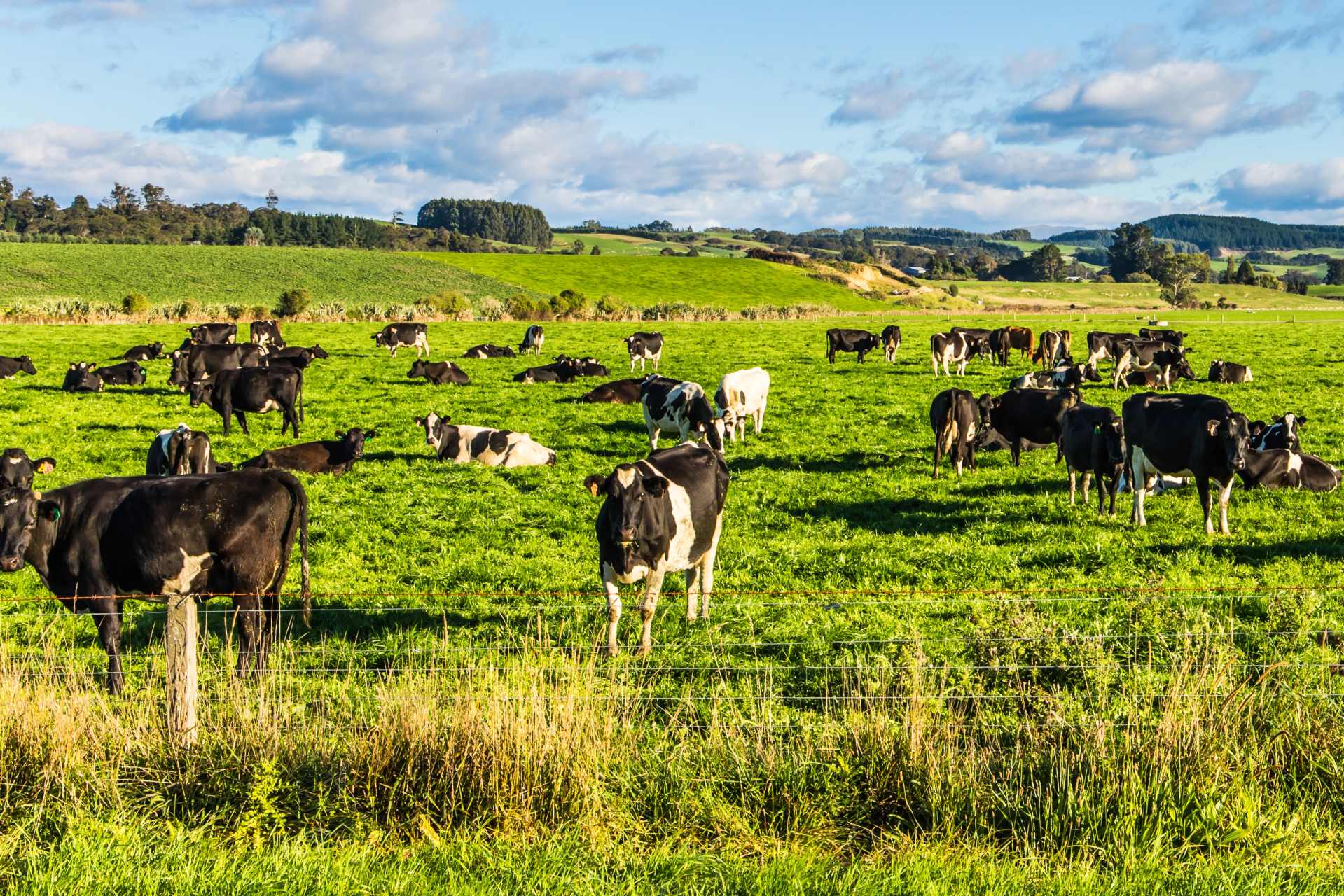
Endocrine Disruption in Farm Animals and Livestock
This is a part of the conversation New Zealand often overlooks.
Farm animals have endocrine systems too.
If glyphosate-based weedkillers can disrupt hormonal signalling in laboratory animals, amphibians, fish, and human cells, it’s reasonable to ask why cows, sheep, pigs, poultry, bees, or fish would somehow be exempt.
They aren’t.
Studies have linked glyphosate exposure in livestock feed to changes in liver enzymes, mineral absorption, reproductive hormones, and even milk composition in cattle. In poultry, altered stress hormone responses and potential reproductive effects have been observed. In pigs, chronic exposure has been associated with inflammation, gut changes, and reduced reproductive performance.
Bees — essential to pollination — show hormone-related effects that influence development, immunity, and fertility. In aquatic species, glyphosate exposure has been linked to disrupted thyroid hormones, abnormal reproductive development, and altered growth patterns.
When endocrine disruption occurs in farm animals, it doesn’t remain contained within the animal itself. It affects animal welfare, productivity, nutrient composition, reproductive success, and ultimately the humans who rely on those animals for food.
If hormonal interference is occurring up and down the food chain, this isn’t just an individual health issue.
It’s a systems issue.
How Endocrine Disruption Affects Wildlife and Ecosystems
Ecosystems run on hormonal timing — migration, metamorphosis, reproduction, feeding cycles.
When endocrine disruption creeps into the environment, everything begins to shift.
Some of the best-documented effects include:
Amphibians:
Thyroid disruption, delayed metamorphosis, abnormal development.
Fish:
Altered sex ratios, suppressed fertility, disrupted reproductive cycles.
Birds:
Changes in behaviour, reproductive timing, and chick development.
Insects (including bees):
Hormone signalling disruption that affects navigation, immunity, development, and survival.
Wildlife acts as an early warning system.
When hormones in the environment start shifting, ecosystems respond long before humans notice.
The question is whether we’re listening — or trying very hard not to.
Why Endocrine Disruption Is an Ecosystem-Level Problem
Hormones don’t operate in isolation.
They influence growth, reproduction, immunity, behaviour, and survival.
So endocrine disruption doesn’t just affect individual animals — it affects populations.
And when populations shift, ecosystems shift.
Examples include:
- declining bee fertility affecting pollination
- disrupted fish reproduction affecting food webs
- amphibian developmental changes affecting predators
- altered metabolism affecting survival and migration
- reproductive timing mismatches caused by hormonal cues
This is why endocrine disruption is now considered one of the biggest under-recognised environmental threats globally — right alongside climate change and biodiversity loss.
It flies under the radar, but its effects accumulate quietly, generation after generation.
Why Hormonal Disruption Signals Appear Across Species
If endocrine disruption linked to glyphosate-based herbicides showed up as a single odd study, one species, or one laboratory result, it would be easy to dismiss.
But that isn’t what the evidence shows.
Instead, we see hormonal effects documented in frogs, fish, rodents, livestock, bees, and human cells. Different species. Different laboratories. Different methods. The same underlying pattern.
When a signal appears across biological systems that barely resemble one another, it becomes harder to write off as coincidence.
At that point, the more reasonable question isn’t whether the pattern exists — but what it’s trying to tell us.
What Endocrine Disruption Means at a Systems Level
Endocrine disruption doesn’t make headlines. It isn’t loud or immediate. It works slowly, cumulatively, and is often underestimated because it doesn’t fit neatly into traditional toxicology frameworks.
But when you step back and look at the bigger picture, one thing becomes clear.
A chemical that interferes with hormones doesn’t just affect one person or one species. It affects every system connected to those hormonal signals.
If glyphosate-based herbicides are subtly interfering with hormonal balance in soil organisms, pollinators, livestock, wildlife, waterways, and humans, then this isn’t an isolated issue.
It’s ecological.
It’s generational.
It’s systemic.
And the most important question may not be whether we have absolute proof.
It may be how many early warning signs we’re willing to overlook before we decide they matter.
Part of The Endocrine Disruption Series: Understanding Hormones in a Chemical World
This article is three part of The Endocrine Disruption Series, a four-part exploration of what the endocrine system is, how delicate it really is, and what happens when glyphosate-based weedkillers and other modern chemicals interfere with the body’s hormonal messaging system.
1. What Is the Endocrine System?
A clear introduction to hormones and how delicate the system really is.
2. Is Glyphosate an Endocrine Disruptor?
An investigation into the scientific evidence across species.
3. What Endocrine Disruption Means for People, Animals, and the Environment (You’re here)
How hormonal disruption plays out in humans, livestock, wildlife, and ecosystems.
4. Why Regulators Miss Glyphosate’s Endocrine Risks
The structural blind spots that keep endocrine disruption invisible in New Zealand’s safety system.
Resources & References
When you start looking at how endocrine disruption shows up across humans, livestock, wildlife, and entire ecosystems, the science stops feeling theoretical. These studies don’t just describe abstract biochemical changes — they reveal patterns that touch real bodies, real farms, and real environments.
If you’d like to explore the research behind the signals we’re seeing in the world around us, these resources are a good place to start.
Endocrine Society — Endocrine-Disrupting Chemicals (EDCs)
A clear explanation of why hormones are sensitive, why timing matters, and how endocrine disruptors affect fertility, development, metabolism, and disease risk.
URL: https://www.endocrine.org/patient-engagement/endocrine-library/edcs
Diamanti-Kandarakis et al. (2009) — “Endocrine-Disrupting Chemicals: An Endocrine Society Scientific Statement”
One of the most widely cited papers on how endocrine disruptors affect humans, wildlife, and ecosystems — including low-dose and non-linear effects.
URL: https://pmc.ncbi.nlm.nih.gov/articles/PMC2726844/
Thongprakaisang et al. (2013) — “Glyphosate Induces Human Breast Cancer Cells Growth via Estrogen Receptors”
Found that glyphosate can act via estrogen receptors in hormone-responsive breast cancer cell lines, raising concerns about estrogenic activity.
URL: https://pubmed.ncbi.nlm.nih.gov/23756170/
Krüger et al. (2013) — “Detection of Glyphosate in Malformed Piglets”
A study linking glyphosate exposure in sows to developmental abnormalities in offspring, highlighting endocrine and reproductive concerns.
URL: https://pubmed.ncbi.nlm.nih.gov/24636962/
German dairy cow case reports (Krüger et al. 2014)
Reports of fertility problems, liver damage, and metabolic disorder indicators associated with chronic glyphosate exposure in dairy herds.
URL: https://pubmed.ncbi.nlm.nih.gov/24059646/
Howe et al. (2004) — “Toxicity of Glyphosate-Based Pesticides to Four North American Frog Species”
Demonstrated thyroid-driven developmental disruption and increased mortality in amphibians, one of the clearest wildlife endocrine signals.
URL: https://pubmed.ncbi.nlm.nih.gov/15352482/
WHO/UNEP — “State of the Science of Endocrine-Disrupting Chemicals” (2012)
A comprehensive global summary on how endocrine disruptors affect fertility, development, wildlife, and ecosystems — and why traditional safety assessments fail to detect them.
URL: https://www.who.int/publications/i/item/state-of-the-science-of-endocrine-disrupting-chemicals
Vandenberg et al. (2012) — “Low-Dose Effects of Endocrine-Disrupting Chemicals”
Explains why endocrine disruptors don’t follow the traditional “dose makes the poison” model and why early-life exposure matters most.
URL: https://pubmed.ncbi.nlm.nih.gov/22419778/
Related Articles on NoMoreGlyphosate.nz
Glyphosate and Male Fertility: What the Science Is Telling Us
Our investigation into animal and human evidence showing how glyphosate-based weedkillers affect sperm quality, hormone balance, and testicular health — one of the clearest examples of endocrine disruption in action.
URL: https://nomoreglyphosate.nz/glyphosate-male-fertility/
Glyphosate and Hormone Disruption — What We Know So Far
A foundational overview of glyphosate’s hormone-interfering potential, including thyroid, reproductive, and metabolic pathways.
URL: https://nomoreglyphosate.nz/glyphosate-hormone-disruption/
Glyphosate-Sprayed Feed: What It Does to Cows — and Why New Zealand Isn’t Testing
A detailed look at what happens when cows eat glyphosate-sprayed pasture or feed, how it affects their health, hormones, fertility, and metabolism — and why New Zealand has no routine testing to monitor exposure.
URL: https://nomoreglyphosate.nz/glyphosate-sprayed-feed-effects-on-cows/
Seen individually, each study might look like a footnote — a small effect here, a subtle shift there. But placed side by side, a clearer picture emerges: endocrine disruption doesn’t stay neatly in the species or setting where it’s first observed. It moves outward, affecting the systems we depend on, the animals we farm, the food we eat, and the ecosystems we rely on more than we realise.
The evidence is there. The question now is what we choose to do with it.
Image Source & Attribution
We’re grateful to the talented photographers and designers whose work enhances our content. The feature image on this page is by kavramm.