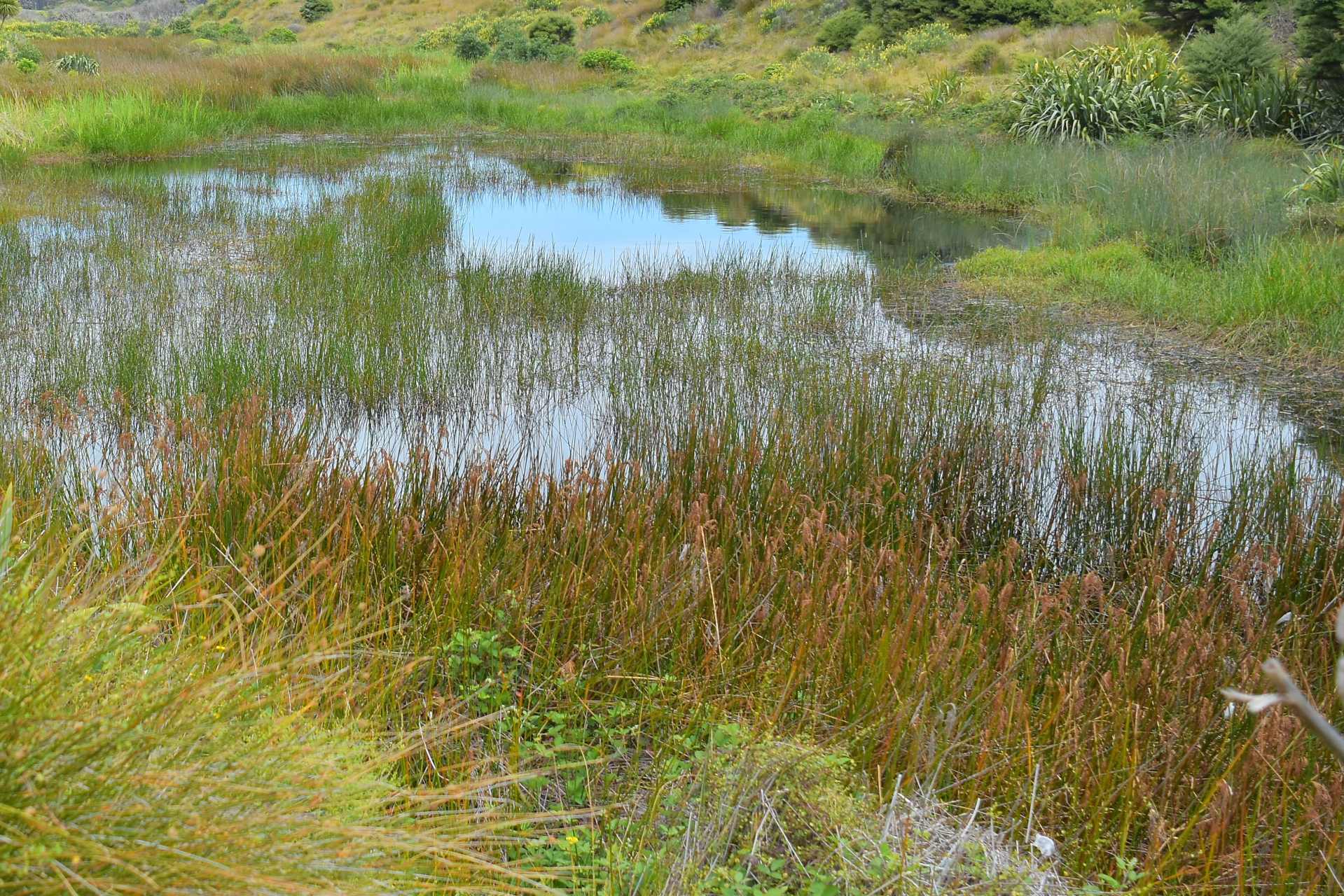
Wetlands are some of the most biologically rich — and most environmentally sensitive — environments in New Zealand.
They provide breeding grounds for insects, birds, fish, and amphibians, and they act as natural filters for water flowing through the landscape.
But wetlands are also fragile ecosystems, where small changes in water chemistry can have outsized effects on the species that depend on them.
When herbicides are sprayed in or near these environments, the chemicals do not simply disappear. They can wash into shallow water, settle into sediment, or remain dissolved in the water column where aquatic life develops.
Recent research suggests that when glyphosate-based herbicides reach aquatic habitats, amphibians may be among the most vulnerable species affected.
The issue has taken on renewed relevance in West Auckland following reports of drone-based aerial spraying of glyphosate formulations within parts of the Te Henga wetland system.
The operation has drawn community concern and is currently the subject of an Environment Court appeal (see our earlier article on glyphosate spraying in the Te Henga wetlands).
Supporters of the programme say the spraying targets invasive weeds threatening native biodiversity, while critics argue that applying herbicides in a wetland environment carries ecological risks that deserve closer scrutiny.
Understanding how herbicides interact with wetland ecosystems — and with the species that depend on them — is therefore an important part of the wider conversation.
Amphibians: Nature’s Early Warning System
Amphibians are often described by scientists as bioindicators of ecosystem health because of their sensitivity to environmental change.
Unlike mammals or birds, amphibians have highly permeable skin, allowing water and dissolved chemicals to pass through their bodies more easily. Their life cycle also exposes them to two different environments: aquatic habitats during their early development, and terrestrial habitats as adults.
This dual exposure makes them particularly sensitive to environmental pollutants.
Globally, amphibians are already in trouble. More than a third of species are considered threatened with extinction, and scientists believe that habitat loss, disease, climate change, and chemical contamination all play a role in their decline.
Because of this sensitivity, researchers often study amphibians to understand how chemicals may be affecting ecosystems more broadly.
Amphibians worldwide are known to be highly sensitive to pesticides. In New Zealand, the only native amphibians are frogs, but the research still offers useful insight into how herbicides can affect aquatic wildlife.
What Recent Research Has Found
A recent study published in Scientific Reports examined how glyphosate-based herbicides affect the early life stages of a frog species known as Physalaemus gracilis, commonly called the weeping frog.
The researchers exposed frog embryos and hatchlings to concentrations of glyphosate-based herbicide similar to levels that have been detected in real-world environments.
The results were concerning. Even at relatively low concentrations, exposure to the herbicide caused multiple changes in developing frogs, including:
- Reduced body size
- Malformations of the mouth and intestines
- Increased heart rates (cardiotoxicity)
- Impaired anti-predator behaviour
- Elevated oxidative stress and biochemical changes
Perhaps most striking was the behavioural impact. Hatchlings exposed to the herbicide were less able to respond to predator-like stimuli, meaning they were slower to flee from danger.
In the wild, this kind of impairment could dramatically reduce survival.
Importantly, some of the concentrations tested in the study were within ranges that have been detected in environmental water samples.
Why Early Life Stages Are So Vulnerable
The sensitivity of amphibian larvae to herbicides has been documented in several other studies.
In one experimental study examining the effects of the glyphosate-based herbicide Roundup® UltraMax, researchers exposed embryos and larvae of two frog species to the chemical.
They found that larvae were significantly more sensitive than embryos, with some species showing higher mortality and increased rates of developmental abnormalities.
The researchers also noted that differences between species could influence how strongly they are affected. For example, larvae that pump larger volumes of water through their mouths while feeding may inadvertently increase their exposure to contaminants dissolved in the water.
This highlights an important point: toxicity does not affect all species equally, and the ecological consequences can vary depending on the species present in a particular habitat.
Glyphosate vs. Glyphosate-Based Herbicides
Another important issue raised by scientists is the difference between pure glyphosate and the commercial herbicide products used in real-world spraying.
Commercial glyphosate herbicides typically contain multiple ingredients, including surfactants designed to help the chemical penetrate plant tissues.
Some studies have suggested that these additional ingredients may contribute significantly to toxicity in aquatic organisms.
A 2014 review examining glyphosate and freshwater ecosystems noted that these formulations often contain proprietary components whose toxicity is not always fully understood or disclosed. Surfactants used in herbicide formulations have been linked in some studies to adverse effects in non-target aquatic species.
This means that environmental risk assessments based solely on the active ingredient may not always capture the full ecological impact of the product being used.
Environmental Exposure Is Still Poorly Understood
Despite decades of herbicide use worldwide, researchers note that actual contamination levels in amphibian habitats are still poorly monitored.
A review examining the potential impacts of glyphosate-based herbicides on amphibians concluded that risk assessments are difficult because:
- Environmental concentrations in amphibian habitats are not well documented.
- Different herbicide formulations vary in toxicity.
- Amphibian species differ widely in their sensitivity.
- Environmental stressors can amplify the effects of chemical exposure.
Because of these uncertainties, the researchers recommended improved monitoring of both amphibian populations and herbicide contamination in aquatic environments.
They also suggested that amphibians should be more routinely included in environmental toxicity testing.
What This Could Mean for Wetlands Like Te Henga
While many of the studies on amphibians come from overseas, the underlying issue they raise is still relevant to New Zealand. Wetlands such as those around Te Henga (Bethells Beach) are complex ecosystems where water, soil, insects, birds, and aquatic life are closely connected.
When herbicides are sprayed in or near wetlands, they do not simply affect the weeds being targeted. Rainfall, runoff, and groundwater movement can carry these chemicals into surrounding waterways and shallow pools where wildlife lives and breeds.
New Zealand’s native frogs are different from many overseas species because their young develop on land rather than as free-swimming tadpoles. However, they still have highly permeable skin and remain sensitive to environmental contaminants. Introduced frog species, which do have aquatic larvae, are also present in parts of the country and may be exposed directly in wetland habitats.
This means that when herbicides enter wetland ecosystems, amphibians are only one part of a much wider picture. Aquatic insects, freshwater invertebrates, and other organisms that form the base of the wetland food web can also be exposed. Because wetlands function as interconnected ecological systems, changes at one level can ripple outward through the entire habitat.
In situations like Te Henga, the concern is not limited to a single species or a single chemical pathway. Wetlands function as interconnected systems where water movement, sediment, vegetation, and wildlife are closely linked. When herbicides enter these environments—whether through spray drift, runoff, or direct application—the exposure is rarely confined to the intended target plants.
Instead, small amounts can move through the wetland system, interacting with sediments, microorganisms, aquatic insects, and other organisms that form the foundation of the ecosystem. Understanding how these pathways operate is an important part of evaluating whether chemical use in sensitive wetland environments is compatible with long-term ecological protection.
What This Means for Spraying in Wetlands
Wetlands are exactly the kind of environments where amphibians breed and where their eggs and larvae develop.
When herbicides are applied in or near wetlands, they have the potential to enter shallow water systems where developing amphibians are present.
Once in the water, these chemicals can expose embryos and larvae during the most sensitive stages of their life cycle.
Even when concentrations are relatively low, studies suggest that subtle changes in development, behaviour, or physiology may occur — changes that could affect survival in the wild.
Over time, these effects may contribute to broader ecological shifts, particularly if amphibian populations decline.
Why Amphibians Matter
Amphibians occupy an important place in many ecosystems.
They serve as both predators and prey, helping to control insect populations while also supporting birds, reptiles, fish, and mammals higher up the food chain.
Because amphibians are so sensitive to environmental changes, declines in their populations can signal deeper ecological problems.
Protecting amphibian habitats therefore helps protect the broader ecosystems that depend on them.
What the Science Suggests About Herbicides in Wetlands
The growing body of research on glyphosate-based herbicides and amphibians does not provide a single simple conclusion. The effects vary depending on species, formulation, exposure levels, and environmental conditions.
But one message is becoming increasingly clear. Amphibians are highly sensitive to contaminants in aquatic environments, and the early stages of their development appear particularly vulnerable.
When herbicides enter wetlands and freshwater habitats, these species may be among the first to feel the impact.
That raises an important question. If wetlands are among the most fragile and biologically important ecosystems in the landscape, should they also be places where herbicides are sprayed?
Frequently Asked Questions
Are amphibians particularly sensitive to herbicides like glyphosate?
Yes. Amphibians have highly permeable skin and spend part of their life cycle in water, which makes them more vulnerable to contaminants in aquatic environments. Many studies have found that early life stages such as embryos and tadpoles are especially sensitive to chemical exposure.
Why are wetlands considered high-risk environments for herbicide use?
Wetlands are water-connected ecosystems. Chemicals applied nearby can move through runoff, sediment, or groundwater, potentially exposing aquatic organisms such as insects, fish, amphibians, and microorganisms that form the base of the food web.
Is glyphosate itself the only concern in herbicide formulations?
Not necessarily. Commercial glyphosate herbicides often contain surfactants and other additives that help the product penetrate plant tissues. Some research suggests these additional ingredients may contribute significantly to toxicity in aquatic environments.
Does research on overseas frog species apply to New Zealand wetlands?
While many studies examine species outside New Zealand, the findings still provide useful insight into how herbicides behave in aquatic ecosystems. New Zealand’s native frogs have different life cycles, but their permeable skin and environmental sensitivity mean they may still be affected by contaminants in their habitats.
Resources & References
Pompermaier, A., Alves, C., Chagas, F. B., Tamagno, W. A., Bridi, C., Ferreira, G. F., Hartmann, P. A., & Hartmann, M. (2024).
Effects of glyphosate-based herbicide exposure in early developmental stages of Physalaemus gracilis.
Scientific Reports.
https://doi.org/10.1038/s41598-024-76338-5
Wagner, N., Müller, H., & Viertel, B. (2017).
Effects of a commonly used glyphosate-based herbicide formulation on early developmental stages of two anuran species.
Environmental Science and Pollution Research.
https://doi.org/10.1007/s11356-016-7927-z
Wagner, N., Reichenbecher, W., Teichmann, H., Tappeser, B., & Lötters, S. (2013).
Questions concerning the potential impact of glyphosate-based herbicides on amphibians.
Environmental Toxicology and Chemistry.
https://doi.org/10.1002/etc.2268
Annett, R., Habibi, H. R., & Hontela, A. (2014).
Impact of glyphosate and glyphosate-based herbicides on the freshwater environment.
Journal of Applied Toxicology.
https://doi.org/10.1002/jat.2997
Image Source & Attribution
We’re grateful to the talented photographers and designers whose work enhances our content. The feature image on this page is by Wirestock.