“Hello, check this out — I took the photo yesterday. How can this be possible?”
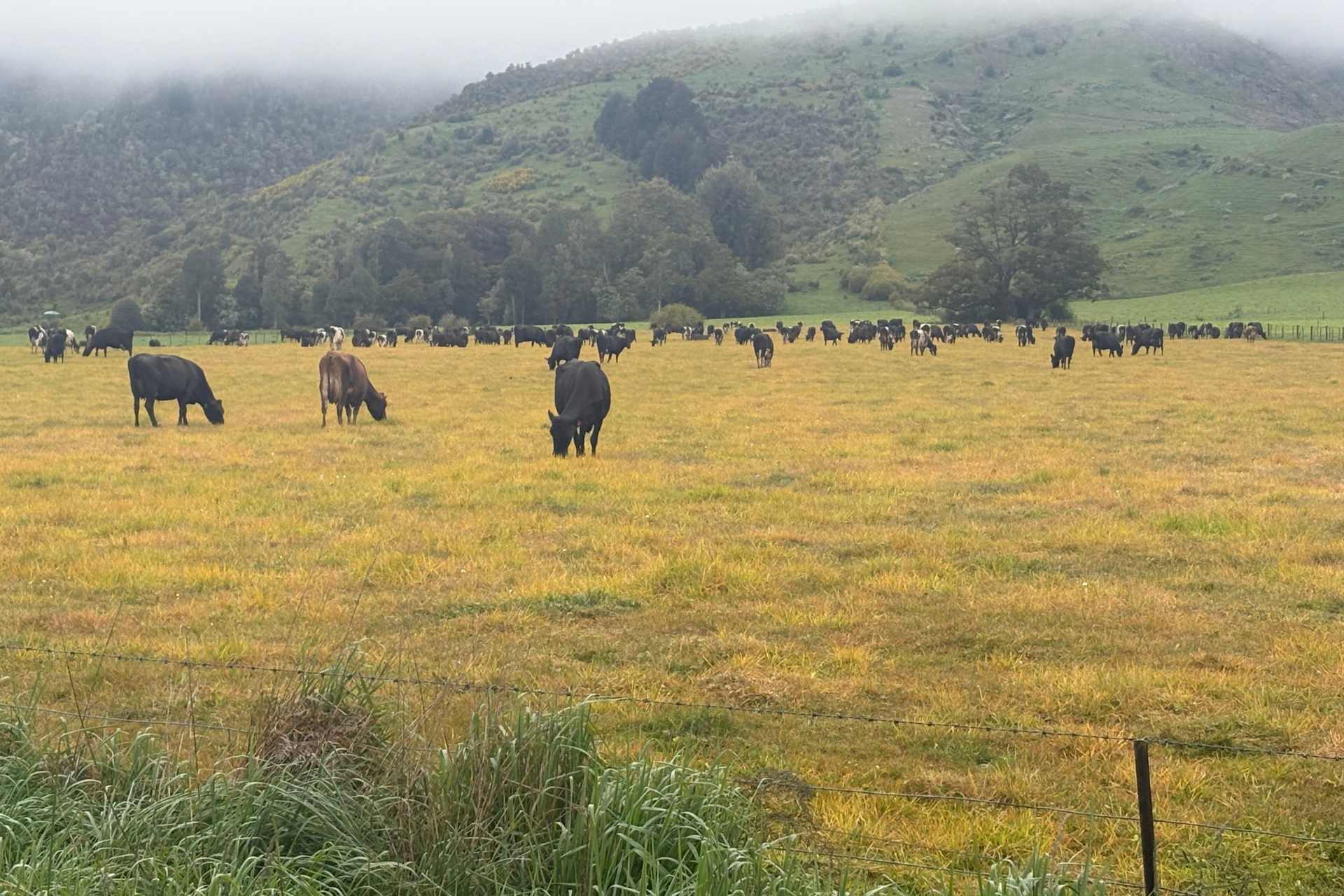
That was the message we received from a concerned supporter, along with a photo of cows grazing on yellowing grass that appeared to have been sprayed just days earlier. The paddock was patchy — green in places, but clearly showing signs of herbicide dieback.
The cows? A milking herd.
The photo was taken in the Tasman region, and it’s prompted the same question we hear again and again: How is this allowed? And more importantly — what ends up in the milk?
The Scene: Not Dead, Just Dying
At first glance, the paddock could be mistaken for drought-affected grass. But to anyone familiar with glyphosate use, the uneven yellowing is all too familiar — the kind that sets in a few days after a typical post-grazing or weed management spray. The fact that a herd of dairy cows is actively grazing this land at this stage is what caught our supporter’s attention — and ours.
And it should raise alarm bells for anyone concerned about food safety, residue limits, and the integrity of New Zealand’s milk supply.
Glyphosate in Milk? Don’t Ask, Don’t Test
Glyphosate residues in milk are not part of routine testing in New Zealand. There are no publicly available reports confirming whether milk from sprayed paddocks is safe — or even whether it’s being tested at all.
While published studies have not confirmed glyphosate residues in milk under standard use, there’s a deeper issue: milk isn’t routinely tested, and most studies rely on controlled feeding trials — not real-world grazing practices like those seen in this photo.
New Zealand’s own regulator acknowledges that no residues were found in past testing — but also that monitoring is minimal, and enforcement of grazing rules is largely left to the discretion of the farmer.
And this in a country that prides itself on clean, green, grass-fed dairy — yet when it comes to glyphosate, we’re not even looking.
MPI’s Vague Withholding Guidance: A Loophole?
According to MPI, there is a withholding period for grazing animals on glyphosate-treated pasture — but it’s not clearly defined in days. Instead, the advice is that animals should not graze “until the pasture has begun to green up again”.
That’s not a science-based safety threshold. That’s a visual guesstimate.
And in a busy farm operation, that’s easy to misjudge or ignore altogether. Especially when there’s no residue testing, no inspections, and no one watching.
The Milk Safety Gap
Let’s be clear: this photo doesn’t prove that illegal milk has entered the supply. It doesn’t prove contamination.
But it does highlight a very real oversight:
- No clear national standard for safe post-spray grazing intervals.
- No routine glyphosate testing in milk.
- No public transparency when questionable practices are observed.
- No accountability when assumptions replace science.
In other words — we don’t know what’s getting into the vat.
And when you consider New Zealand’s massive dairy exports, that’s not just a local issue — it’s a potential blow to our international reputation.
We Trust Farmers — But Who Verifies?
Most farmers do their best to follow the rules. But what are the rules, exactly?
When guidelines are vague — and there’s no monitoring, no residue testing, and no independent verification — everything hinges on assumption.
In this case, someone (perhaps unknowingly) allowed a milking herd back into a paddock while glyphosate was still visibly active in the grass.
- Was it legal? Possibly.
- Was it safe? We don’t know.
- Will it be tested? Almost certainly not.
That’s not a food safety system. That’s a shrug.
Why We’re Not Testing Milk (and Why That’s the Right Call)
At first glance, it might seem obvious: if cows are grazing recently sprayed pasture, shouldn’t we test the milk?
But here’s the catch — milk testing for glyphosate is technically possible, but deeply challenging:
Milk from dozens of farms is combined at regional processing plants, so any contamination is diluted across thousands of litres. Even if we did find a residue, there’d be no way to trace it back to a specific paddock or practice.
Glyphosate is also notoriously difficult to detect in milk, requiring costly, highly specialised methods that are often unreliable at very low levels.
We’ve been advised that part of the reason is chemical: glyphosate is water-soluble, not fat-soluble. That means it doesn’t readily accumulate in milk fat the way some other contaminants do. Instead, it’s more likely to pass through the body via urine.
That said, trace residues may still appear in the water-based portion of milk — but they’re harder to detect, and even easier to overlook, especially when no one is routinely testing for them.
What Comes Next: Following the Evidence
This photo doesn’t prove there’s glyphosate in your milk — but it does reveal a regulatory blind spot.
There’s no testing. No tracking. No alert system. And no way for the public to know how often this happens — or what long-term risks might be quietly accumulating in the background.
That’s why we’re expanding our testing where it counts — both in the products that end up in your pantry, and in the visual evidence that speaks for itself.
Together, that gives us the leverage to push for better regulations, clearer rules, and a food system that doesn’t rely on blind trust.
Want to Help?
If you want to help us uncover what others won’t — and keep pressure on decision-makers — your support makes a real difference.
Donate here — every cent goes directly to lab testing, not to couriers, not to admin.
Just the testing. Just the facts.
And if you’ve seen something similar in your region — cows grazing yellowing pasture, spray activity near livestock, or anything else that doesn’t sit right — send it in.
Because the more we see, the harder it is to ignore.
Resources & References
Real-world grazing practices — like the one captured in the photo above — remain largely unexamined by science. Most studies rely on controlled feeding trials in idealised conditions, not the unpredictable realities of paddock spraying, weather, or farmer discretion.
And here in New Zealand, where glyphosate use is widespread, glyphosate residues in milk are not routinely tested — not even when animals graze treated pasture. That’s not science-based reassurance. That’s regulatory silence.
Glyphosate in livestock: feed residues and animal health
Vicini JL, Reeves WR, Swarthout JT, et al. (2019)
A peer‑reviewed review assessing whether glyphosate residues in livestock feed affect animal health or lead to residues in animal products. The authors concluded that under standard conditions glyphosate use has not resulted in detectable residues in milk or meat.
Influences of glyphosate residues and different concentrate feed proportions in dairy cow rations during early gestation
Heymann J., Rief M., et al. (2023) – PLOS ONE
This study exposed pregnant dairy cows to glyphosate‑contaminated feed and measured health outcomes in cows and calves. It did not confirm residue transfer into milk, but illustrates the type of feeding‑trial conditions used in research.
Glyphosate and Its Metabolites in Food of Animal Origin
de Morais Valentim JMB, et al. (2024)
A comprehensive review article exploring glyphosate/AMPA presence in foods of animal origin globally. It highlights gaps in testing and detection methods in dairy and other animal‑derived foods.
Glyphosate – Call for Information Summary Report
Environmental Protection Authority of New Zealand (2022)
This regulatory summary notes that no detectable glyphosate residues were found in New Zealand milk following grazing of sprayed pasture—but also flags that monitoring is minimal and oversight is limited.
Guidance on the Management of Agricultural Chemicals or Maintenance Compounds in Milk
Ministry for Primary Industries (2023)
This document outlines how residue risks should be managed on dairy farms. It includes the advice that animals should not graze treated pasture “until the pasture has begun to green up again” — a visual standard without a defined timeframe.
These are the studies and statements currently informing our national stance. But perhaps the more important question is:
What’s not being studied, not being tested, and not being talked about — and why?
Image Source & Attribution
This image featured on this page was submitted by a supporter of No More Glyphosate NZ and is used with permission. We are grateful to all those who help us document real-world examples of what’s happening on the ground.