When most people think about glyphosate, they think of Roundup and weed control — not the growing problem of glyphosate in food.
But there’s another side to its use that rarely gets talked about, even though it plays a huge role in why glyphosate keeps showing up in our food supply.
Long before the public began worrying about residues, farmers were already using glyphosate for something very different from weed control: drying crops right before harvest. This practice, known as pre-harvest desiccation, has quietly become a standard tool in conventional agriculture. It forces crops to ripen evenly, speeds up drying, and keeps harvest schedules on track.
It’s efficient. It’s predictable. And it’s one of the key reasons glyphosate ends up in cereals, breads, and other staple foods.
So while industry voices talk about “replacing” glyphosate with new herbicides like Icafolin, almost no one is addressing what happens to this part of its use — the part that sends residues straight onto food crops just days before harvest.
Why Is Glyphosate Sprayed Right Before Harvest?
Pre-harvest spraying is a management shortcut. By applying glyphosate just before harvest, farmers can:
- Force the crop to ripen evenly
- Kill off green plant matter
- Speed up drying
- Reduce losses from weather or uneven ripening
- Meet strict supply chain uniformity requirements
It’s efficient.
It’s predictable.
It’s built into the economics of modern agriculture.
But it also creates one of the most direct routes for glyphosate to end up in food. When spraying happens just days before harvesting, residues don’t have time to break down. That’s how traces end up in bread, cereal, baby food — and even some products labelled organic, through drift or cross-contamination.
If you’ve ever wondered how glyphosate actually gets into our food in the first place, we break that down in more detail here: How Glyphosate Gets Into Our Food.
So… Why Not Just Stop?
Because once the system adapted to glyphosate-assisted harvesting, everything else adapted around it. Over time, farmers planted varieties with uneven or staggered ripening because they could rely on glyphosate to bring everything back into sync at the end.
Processors began expecting grain to arrive at consistent moisture levels, and the surrounding supply chain — from storage to transport contracts — was built around tight, chemically assisted timelines.
Remove glyphosate from that picture and you’re not just removing a chemical; you’re unravelling a system that has been designed around its convenience for decades. This isn’t simply a weed-control issue — it’s a supply-chain dependency that touches every layer of how modern bulk crops are grown, scheduled, dried, moved, and sold.
Are There Other Chemicals That Can Replace It?
Some chemical alternatives do exist—but none tick all the boxes:
- Diquat (Reglone®): A contact herbicide used for desiccation in some crops like potatoes. But it’s banned in the EU over safety concerns.
- Carfentrazone-ethyl: Used in pulses, but doesn’t fully desiccate crops and often requires repeat spraying.
- Glufosinate: Another option, but it’s less effective, more expensive, and still comes with toxicity questions.
So far, no chemical has replaced glyphosate in terms of cost, consistency, and efficiency. Which is why, despite all the controversy, it’s still in widespread use.
What About Mechanical or Natural Methods?
There are non-chemical alternatives—but they’re not simple swaps.
- Swathing (cutting the crop and letting it dry in the field) can work well—but it’s labour-intensive and risky in wet climates.
- Natural ripening avoids chemicals completely, but requires patience, the right weather, and varieties bred for uniformity.
- Plant breeding can help—with new crop lines that ripen more evenly or dry down faster—but that takes time and investment, especially in a food system that’s not geared for slow change.
In short: there are alternatives. But they’re slower. More complex. Less appealing to large-scale, chemically dependent operations.
So What Happens Now?
If regulators finally ban pre-harvest glyphosate use—or if enough public pressure forces the industry to act—something will have to give. But right now, there’s no silver-bullet replacement. Which means we’re facing a desiccation dilemma:
Do we keep looking for the next chemical shortcut?
Or do we start redesigning the system so we don’t need one?
Where Does This Leave New Zealand?
Here in New Zealand, pre-harvest glyphosate spraying is still allowed, despite mounting international concerns. And instead of tightening controls, the Ministry for Primary Industries (MPI) is currently proposing to increase the allowable residue limits (MRLs) on some food crops by 9900%.
That means we could see more glyphosate in food — in wheat, oats, lentils, and other staples — not less. And most shoppers would never know, because there’s no requirement to disclose whether a crop was desiccated chemically before harvest. No labels. No warnings. Just silent approvals behind closed doors.
But we’re watching. And we think the public deserves to know.
Transparency means more than knowing where our food comes from. It means knowing what’s been sprayed on it—and why it’s still allowed.
A Final Word
Banning glyphosate desiccation won’t fix the system, but it would stop one of the most direct routes for residues to reach our food.
Desiccation isn’t just a harvest technique—it’s a symptom of a bigger problem: a food system that values speed and uniformity over health, biodiversity, and soil integrity.
If we’re going to talk seriously about replacing glyphosate, we have to talk about more than weeds. We have to talk about what we’ve designed this system to do—and whether that’s really what we want anymore.
This article is part of a mini-series exploring what’s replacing glyphosate—and why it might not be the revolution we’re being sold.
- Part 1: Icafolin — Bayer’s New Herbicide & the Next Glyphosate Alternative?
- Part 2: You are here — The Desiccation Dilemma: Why Glyphosate’s Real Role Is Hard to Replace
- Part 3: What Makes Icafolin Different from Glyphosate?
- Part 4: What Happens After Glyphosate? A System Under Scrutiny
Resources & References
It’s not just about what’s sprayed—it’s about what we’re not being told. These resources shine a light on the hidden role of glyphosate in our food supply and the systemic challenges we face in trying to replace it.
Glyphosate Residue Limits Proposal – Ministry for Primary Industries (MPI), New Zealand
Outlines the proposal to raise allowable glyphosate residues on several food crops in New Zealand. Relevant to concerns about glyphosate desiccation and consumer exposure.
https://www.mpi.govt.nz/consultations/proposed-amendments-to-the-new-zealand-food-notice-maximum-residue-levels-for-agricultural-compounds/
EFSA 2023 Renewal Assessment Report: Glyphosate
The European Food Safety Authority’s latest evaluation of glyphosate’s safety. Includes discussion on residues, environmental fate, and pre-harvest uses.
https://www.efsa.europa.eu/en/topics/topic/glyphosate
Glyphosate in Food: Pre-harvest Use Drives Residue Exposure
Your own investigative article illustrates how pre-harvest glyphosate use contributes to residues in widely consumed food products.
https://nomoreglyphosate.nz/glyphosate-desiccation-harvest-shortcut/
Why Glyphosate Is Sprayed Before Harvest(Ecowatch)
Breaks down historical and modern motivations behind glyphosate desiccation—from speeding up harvest to ensuring uniform ripening.
https://www.ecowatch.com/roundup-cancer-1882187755.html
Glyphosate Desiccation Risks Confirmed in Recent Barley Trial(Safe Food Matters)
Summarizes new research showing that glyphosate residue levels can exceed legal limits even when applied according to label, specifically in malting barley.
https://safefoodmatters.org/2024/09/05/scientists-find-risks-with-preharvest-glyphosate/
What Is Crop Desiccation?(Wikipedia overview with references)
A general primer explaining how crop desiccation works, the difference between contact/desiccant herbicides and systemic ones like glyphosate, and the scope of its use across food crops.
https://en.wikipedia.org/wiki/Crop_desiccation
Why Raising MRLs Threatens Public Health
Explains the potential risks behind MPI’s proposal to raise glyphosate residue limits on food. Contextualizes this issue for a New Zealand audience.
https://nomoreglyphosate.nz/raising-mrls-public-health-risk
The path away from glyphosate isn’t a straight chemical swap—it’s a systems shift. As you explore these sources, ask the bigger question: do we need a new desiccant—or a new approach to food production?
Image Source & Attribution
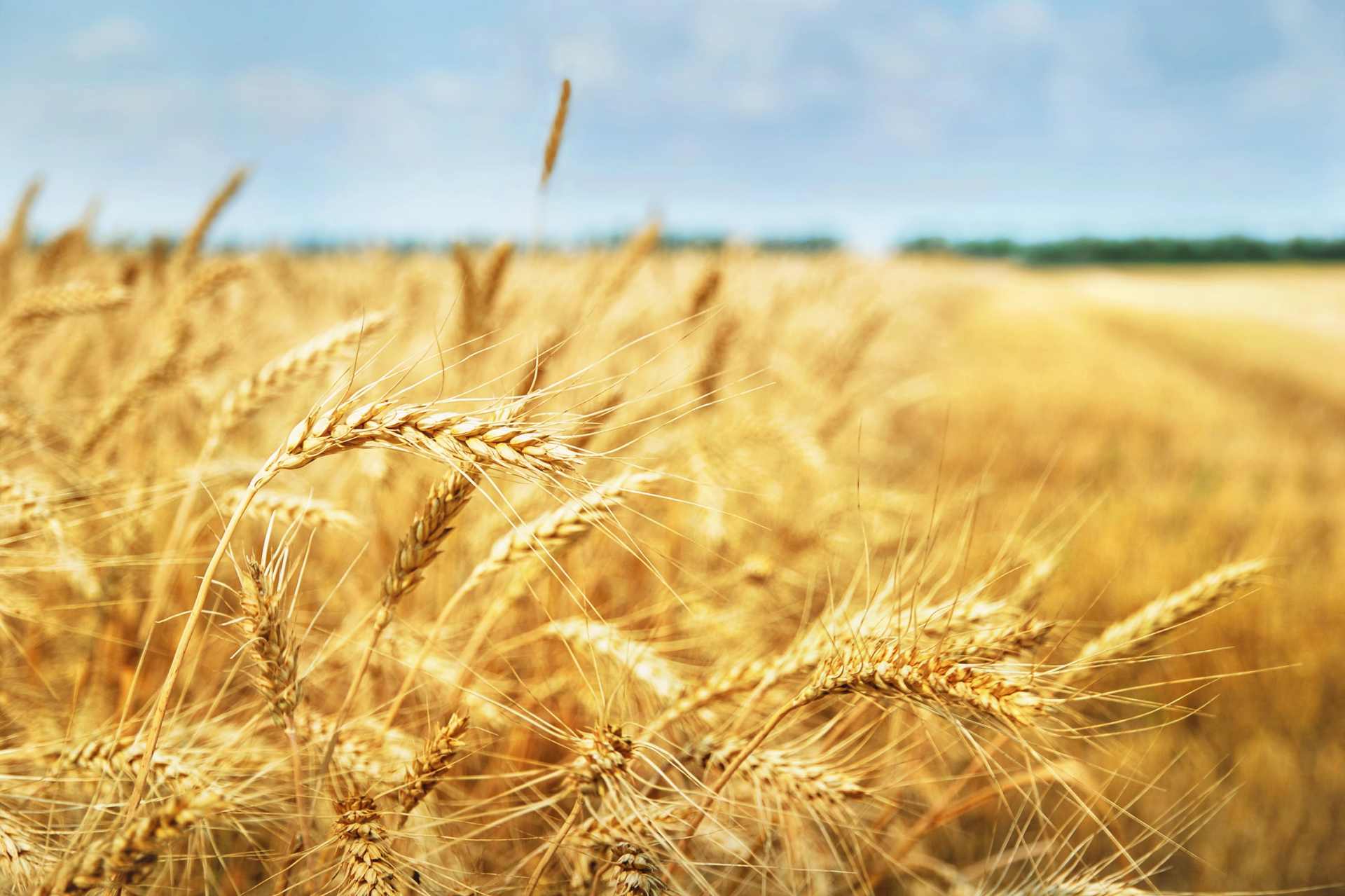
We’re grateful to the talented photographers and designers whose work enhances our content. The feature image on this page is by IgorStrukov.