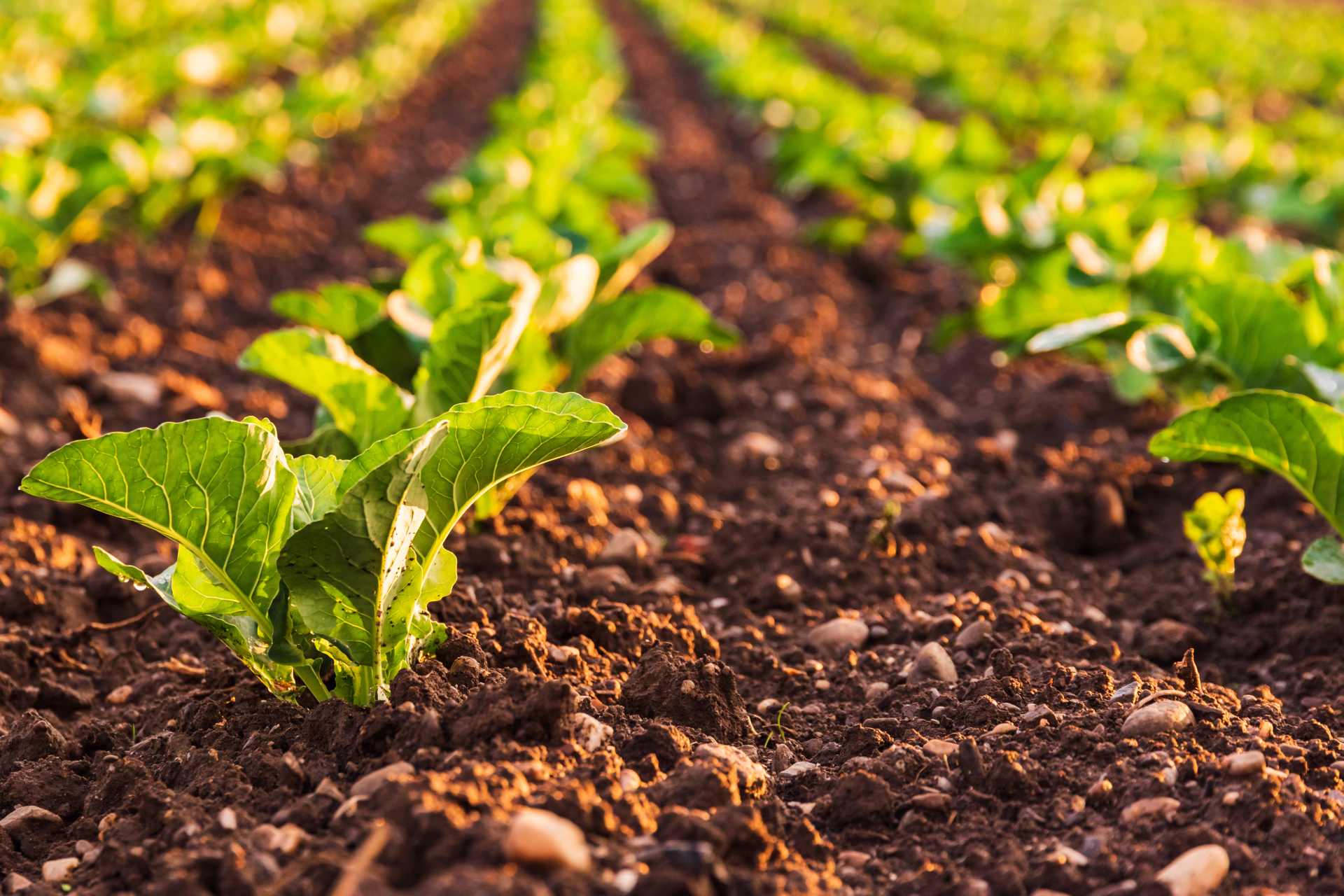
There was a time when many farms looked very different from the landscapes that dominate large parts of modern agriculture today.
Crop rotations were often broader. Farms were more mixed. Livestock and cropping systems were more commonly interconnected. Shelter belts, small paddocks, uncultivated margins, wetlands, and rotational diversity created a patchwork of variation across the land.
Modern agriculture, by contrast, increasingly rewards simplification.
Larger paddocks, fewer crop types, increased specialisation, scalable systems, and predictable outputs have increasingly become central features of modern agricultural efficiency.
In many ways, these shifts are understandable. Farmers operate within increasingly narrow economic margins while trying to remain competitive in highly demanding global markets. Machinery is expensive. Labour is scarce. Weather is unpredictable. Input costs continue rising.
Simpler systems are often easier to manage operationally, financially, and logistically. But simplification may also come with trade-offs that become more visible over time.
One of the recurring themes emerging across modern agriculture is that highly simplified biological systems often appear more vulnerable to disruption, adaptation, and dependence.
And herbicide resistance may be one example of that broader pattern.
Farming Efficiency vs Resilience: Why the Difference Matters
Efficiency and resilience are not always the same thing. A system can be extremely efficient under stable conditions while becoming increasingly fragile when conditions change.
Nature itself often operates through redundancy and diversity. Different species perform overlapping functions. Varied ecosystems buffer shocks. Diversity can slow the spread of pests, disease, and ecological collapse because no single weakness dominates the entire system.
Simplified biological systems can behave differently.
When large areas repeatedly rely on similar crops, similar management practices, similar herbicides, and similar intervention strategies year after year, selective pressure can intensify in highly concentrated ways.
Over time, biology adapts. Not because the system is “bad,” but because adaptation is what living systems do. This is one reason crop rotation has historically played such an important role in agriculture.
Rotation changes the biological environment. Different crops alter planting schedules, soil disturbance patterns, nutrient demands, root structures, weed pressures, and herbicide programs. Diversity interrupts repetition.
In biological systems, interruption matters.
Because resistance often thrives in highly repetitive environments.
How Monocultures Increase Herbicide Resistance Pressure
Modern monocultures can create highly efficient production systems, but they may also unintentionally create ideal conditions for certain biological pressures to intensify.
If the same crop is repeatedly grown across large areas, the same weed species may repeatedly emerge. If similar herbicides are repeatedly used to control those weeds, the same selective pressures continue season after season.
Eventually, surviving weeds may pass along traits that help them tolerate those conditions more effectively. This is not unique to glyphosate-based weedkillers. Similar patterns have emerged historically with insecticides, fungicides, and antibiotics.
Repeated pressure often changes biological populations over time.
The challenge is that once resistance begins developing, systems frequently respond by escalating intervention through additional herbicides, increasingly complex application programs, stacked chemistries, new technologies, or replacement products.
Sometimes this works temporarily. But over longer periods, the cycle itself can continue repeating.
The deeper issue may not simply be which chemical is being used, but whether increasingly simplified systems naturally become more dependent on escalating intervention over time.
Why Crop Diversity May Improve Long-Term Farm Resilience
Diversity is often discussed in environmental conversations, but it may also function as a practical resilience strategy. Rotational diversity can reduce repetitive selection pressure. Mixed farming systems may spread economic risk. Varied planting schedules can interrupt weed life cycles.
Different crop structures influence moisture, soil biology, pest pressure, and nutrient dynamics in ways that monocultures may not. Even small levels of variation can sometimes create buffering effects that are difficult to replicate through chemical intervention alone.
This does not mean diverse systems are automatically easy or economically superior. In many cases, they are more complex to manage and may involve lower short-term efficiencies.
That tension is important. Because modern agriculture increasingly operates within economic systems that often reward short-term productivity more directly than long-term resilience.
And farmers themselves are frequently caught in the middle of that reality.
Why Modern Farming Systems Favour Simplification
It is easy to talk abstractly about crop diversity and rotational resilience. It is much harder to implement those systems under real-world financial pressure.
Modern farms often carry enormous operational costs:
- land prices,
- machinery finance,
- fuel,
- fertiliser,
- labour,
- compliance,
- insurance,
- infrastructure,
- and debt servicing.
In that environment, simplification can become financially rational.
Standardised systems are easier to scale. Large equipment performs best under uniform conditions. Predictability reduces operational friction. Specialisation can improve margins in the short term.
The problem is that systems optimised heavily around efficiency may gradually lose some of their adaptive flexibility over time. And once dependence becomes deeply embedded, changing direction can become extraordinarily difficult.
This is one reason resistance discussions should not be framed as “farmers making bad choices.”
Many farmers may simply be operating within systems that increasingly narrow the range of economically viable alternatives available to them.
Can Agricultural Technology Solve Herbicide Resistance?
Modern agriculture is increasingly turning toward technological solutions to manage resistance and maintain productivity.
Precision spraying systems, AI-guided application tools, genetic technologies, drones, robotic weeders, stacked herbicide programs, and advanced data modelling all promise greater control and improved efficiency.
Some of these technologies may genuinely reduce chemical use and improve targeting. But there is also a larger question quietly sitting beneath the surface:
Can increasingly sophisticated technology fully solve problems that emerge from repeated biological pressure within simplified systems?
Or does technology sometimes delay adaptation rather than eliminate it?
History suggests biology often continues responding regardless of how advanced the intervention becomes. That does not mean innovation is pointless. Far from it.
But it may suggest that resilience involves more than simply increasing precision or escalating control. It may also require maintaining enough diversity within systems to prevent excessive dependence from developing in the first place.
What Herbicide Resistance May Reveal About Farming Systems
One of the most interesting aspects of herbicide resistance is that it may function almost like a systems warning signal. Not necessarily signalling immediate collapse or failure.
But perhaps signalling increasing rigidity.
The more tightly optimised a system becomes around specific interventions, the more vulnerable it may become when those interventions lose effectiveness.
In many ways, resistance forces agriculture into a difficult balancing act between maximising efficiency, maintaining productivity, reducing costs, preserving flexibility, and avoiding biological conditions that accelerate further adaptation.
There may never be a perfect solution to that tension. But recognising the tension itself may matter. Because long-term resilience often begins with acknowledging complexity rather than assuming permanent control is possible.
The Future of Resilient Farming Systems
Modern agriculture has achieved extraordinary gains in productivity over the past century.
But biological systems rarely remain static indefinitely.
As resistance continues emerging across farming systems worldwide, the larger conversation may increasingly shift from how to maximise short-term control — toward how to preserve long-term resilience within systems that must continue adapting alongside the biology they depend upon.
Resistance, Resilience, and the Future of Farming
This article is part of the Resistance, Resilience, and the Future of Farming series, which explores how herbicide resistance, repetitive weed management practices, simplified farming systems, and emerging agricultural technologies may be reshaping the long-term resilience of modern food production systems.
The series examines whether biology is gradually adapting to the systems humans have built — and what that may mean for the future of farming.
Part 1 — Herbicide Resistance in New Zealand: When Weed Control Stops Working
An introduction to rising herbicide resistance across New Zealand farming systems and why repeated reliance on single-herbicide strategies may gradually become self-defeating over time.
Part 2 — Could Fence Lines and Roadsides Be Driving Herbicide Resistance?
Explores how roadsides, drains, fence lines, railway corridors, and non-crop areas may unintentionally become ideal environments for resistance development through repeated herbicide exposure.
Part 3 — The “Precision Agriculture” Question: Smarter Farming or Smarter Chemical Dependence?
Examines whether AI-guided spraying systems, drones, data-driven agriculture, and precision herbicide application represent a genuine reduction in chemical dependence — or a more technologically sophisticated version of it.
Part 4 — Crop Rotation, Monocultures, and the Fragility of Simplified Systems
Explores whether increasingly simplified farming systems may become biologically less resilient over time, and why rotational diversity, ecological buffering, and system complexity may matter more than often acknowledged. You are Here.
Part 5 — The Resistance Cycle: When Biology Adapts to Human Control Systems
Looks at the broader recurring pattern of resistance across herbicides, pesticides, antibiotics, and other human control systems — and what these repeating cycles may reveal about adaptation itself.
Image Source & Attribution
We’re grateful to the talented photographers and designers whose work enhances our content. The feature image on this page is by iciakp.