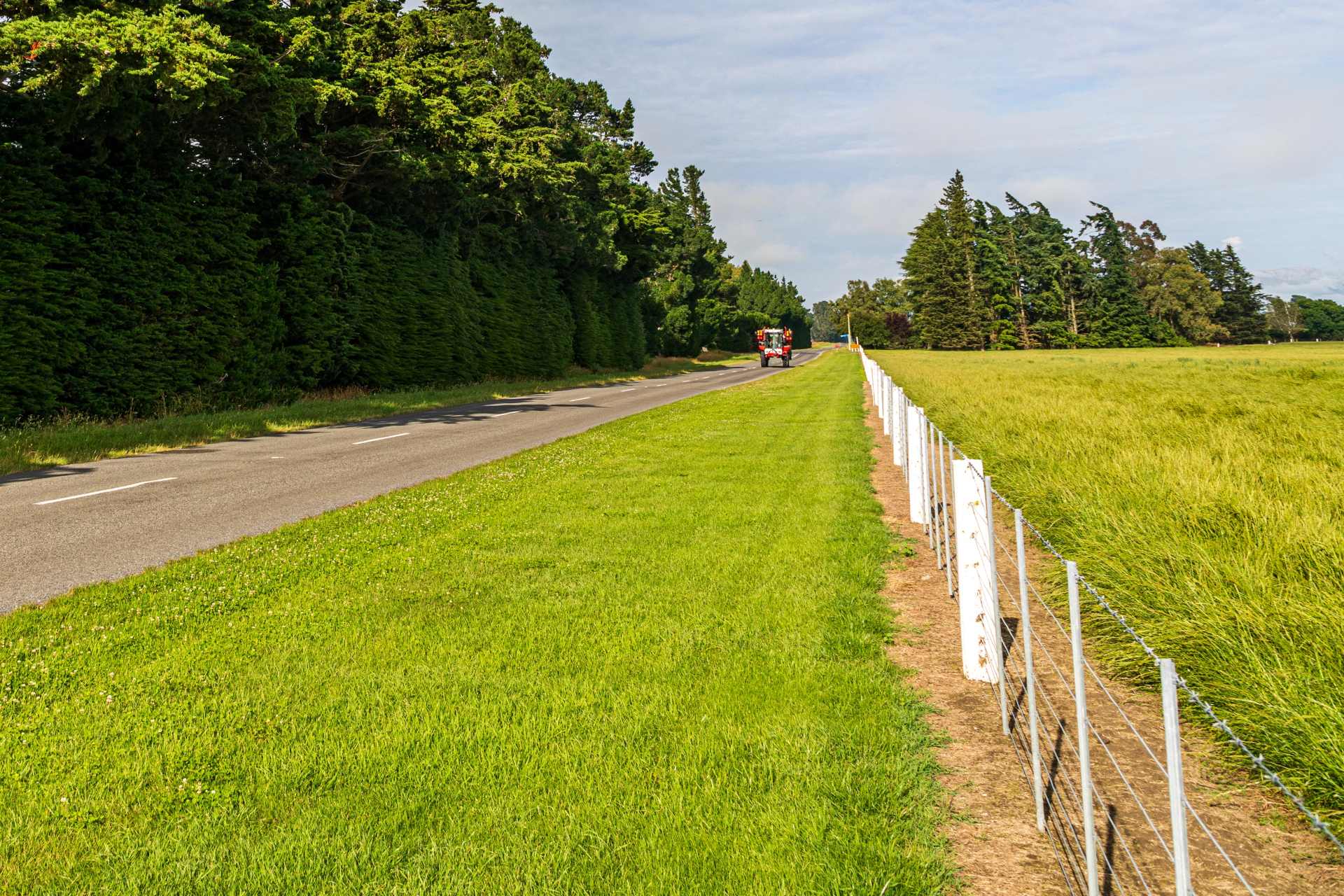
When conversations about herbicide resistance happen, most people naturally picture crop paddocks.
Wheat fields. Barley. Corn. Soybeans.
The focus tends to stay inside the farm gate.
But some researchers and weed management experts are increasingly paying attention to something else entirely: the repetitive spraying environments that exist around the edges of modern landscapes.
Fence lines. Roadsides. Rail corridors. Drains. Industrial margins. Berms. Utility corridors. Public parks. Around storage sheds. Along irrigation channels.
Places that are not technically crops — yet are often sprayed year after year using many of the same herbicides under highly repetitive conditions.
And in some cases, these overlooked areas may quietly create ideal environments for herbicide resistance to develop.
Not because herbicides suddenly “stop working” overnight.
But because biology adapts.
Resistance Does Not Usually Arrive All At Once
One of the most important things to understand about herbicide resistance is that it is rarely a dramatic event.
Weeds do not suddenly become invincible overnight.
Instead, resistance often develops gradually through repeated selection pressure. A small number of weeds may naturally survive a spray event due to genetic variation. Those surviving plants reproduce. Their offspring inherit similar traits. Over time, repeated exposure can slowly shift the population toward greater tolerance.
This is not unique to glyphosate. It is simply how biological adaptation works.
The more repetitive the selection pressure becomes, the greater the opportunity for resistant populations to emerge.
That is one reason modern weed science increasingly emphasises diversity:
- rotating herbicides,
- mixing management strategies,
- varying control methods,
- and avoiding overreliance on any single approach.
The goal is not simply killing weeds in the short term. It is maintaining long-term effectiveness.
The Overlooked Environments Outside Cropping Systems
Inside commercial cropping systems, many growers are now highly aware of resistance risks.
Integrated weed management strategies, crop rotations, mechanical controls, herbicide rotation programmes, and resistance monitoring have all become part of modern conversations around sustainable farming.
But non-crop areas often operate very differently.
Many of these environments are managed primarily for efficiency, access, visibility, safety, or maintenance. The same areas may be sprayed repeatedly across long periods using similar products because the system is operationally simple, cost-effective, and scalable.
This can include:
- roadside weed management,
- rail corridor maintenance,
- fence-line spraying,
- drains and waterways,
- industrial and storage areas,
- public parks and berms,
- school boundaries,
- utility corridors,
- and council-managed vegetation control zones.
Unlike diversified cropping systems, these environments may experience relatively low ecological diversity and highly repetitive management patterns over many years.
That combination has attracted increasing attention within resistance discussions internationally.
Why Fence Lines Matter More Than They First Appear
Fence lines are particularly interesting because they often sit directly beside productive farmland while being managed separately from the cropping system itself.
A paddock may rotate crops and herbicides carefully, while the fence line beside it receives the same spray programme repeatedly year after year.
Over time, this may unintentionally create ideal selection environments for resistant weeds.
Researchers sometimes describe these areas as “reservoirs” where resistant populations can survive and persist outside the main crop area.
Importantly, this does not mean every sprayed fence line automatically creates resistance problems. Nor does it mean glyphosate alone is responsible.
Resistance is a systems issue.
The concern is more about repetition, simplification, and long-term dependence on highly uniform management practices.
The New Zealand Glyphosate Resistance Nuance
This is where the discussion requires careful balance.
New Zealand’s Foundation for Arable Research (FAR) has previously reported that random arable farm surveys did not detect glyphosate resistance within the surveyed cropping environments.
At the same time, however, concerns around glyphosate resistance outside those random survey settings have still been raised — particularly in relation to non-crop management areas such as fence lines and similar repetitive spraying environments.
These are not contradictory findings.
They may simply reflect the reality that resistance pressures can develop differently depending on how an environment is managed.
A carefully rotated cropping system may face very different selective pressures compared with a roadside verge or fence line repeatedly treated with the same herbicide programme across many years.
That broader systems perspective is important for maintaining credibility in resistance discussions.
Could Public Spaces Also Be Part of the Conversation?
This is where the issue becomes larger than agriculture alone.
Across New Zealand, herbicides are routinely used in:
- public parks,
- berms,
- roadside edges,
- drains,
- rail corridors,
- school surroundings,
- and other public infrastructure zones.
These programmes often exist for understandable reasons. Councils and contractors face enormous pressure to manage vegetation efficiently, maintain visibility and access, reduce fire risk, protect infrastructure, and operate within limited budgets.
But the long-term ecological question still remains worth asking:
Could repeated single-product spraying in public spaces unintentionally contribute to resistance pressures over time?
And if so, are more integrated approaches being considered?
These are not simple questions. Mechanical control, manual labour, alternative systems, and diversified management approaches can all involve significant cost, staffing, logistical, and operational challenges.
Yet resistance itself may eventually force these conversations regardless.
Because once biology begins adapting, the effectiveness of repetitive systems can gradually erode.
Resistance Is Ultimately About Simplified Systems
One of the more interesting aspects of herbicide resistance is that it reflects a broader pattern seen throughout modern industrial systems.
Simplified systems are often highly efficient in the short term.
But over time, simplicity can also create vulnerability.
Monocultures can increase pest pressure. Repeated antibiotic use can drive bacterial resistance. Insecticides can select for resistant insect populations. And highly repetitive weed management systems may gradually encourage resistant weeds.
The deeper issue may not simply be glyphosate itself.
It may be what happens when any biological system faces the same pressure repeatedly across long periods without enough variation or adaptive diversity built into the system.
That is a much bigger conversation than any single chemical.
Looking Beyond the Farm Gate
Herbicide resistance may ultimately be shaped not only by what happens inside crop paddocks, but also by the repetitive management systems surrounding them.
Fence lines, roadsides, drains, rail corridors, and public maintenance zones are easy to overlook because they sit quietly in the background of everyday life. Yet these areas may reveal something important about how modern weed control systems function at a landscape scale.
The long-term challenge may not simply be finding stronger herbicides.
It may involve building more resilient systems:
- more diverse management approaches,
- less repetitive dependence,
- and more adaptive ways of thinking about weed control across the wider environment.
Because biology rarely stops adapting simply because humans prefer consistency.
Resistance, Resilience, and the Future of Farming
This article is part of the Resistance, Resilience, and the Future of Farming series, which explores how herbicide resistance, repetitive weed management practices, simplified farming systems, and emerging agricultural technologies may be reshaping the long-term resilience of modern food production systems.
The series examines whether biology is gradually adapting to the systems humans have built — and what that may mean for the future of farming.
Part 1 — Herbicide Resistance in New Zealand: When Weed Control Stops Working
An introduction to rising herbicide resistance across New Zealand farming systems and why repeated reliance on single-herbicide strategies may gradually become self-defeating over time.
Part 2 — Could Fence Lines and Roadsides Be Driving Herbicide Resistance?
Explores how roadsides, drains, fence lines, railway corridors, and non-crop areas may unintentionally become ideal environments for resistance development through repeated herbicide exposure. You are Here.
Part 3 — The “Precision Agriculture” Question: Smarter Farming or Smarter Chemical Dependence?
Examines whether AI-guided spraying systems, drones, data-driven agriculture, and precision herbicide application represent a genuine reduction in chemical dependence — or a more technologically sophisticated version of it.
Part 4 — Crop Rotation, Monocultures, and the Fragility of Simplified Systems
Explores whether increasingly simplified farming systems may become biologically less resilient over time, and why rotational diversity, ecological buffering, and system complexity may matter more than often acknowledged.
Part 5 — The Resistance Cycle: When Biology Adapts to Human Control Systems
Looks at the broader recurring pattern of resistance across herbicides, pesticides, antibiotics, and other human control systems — and what these repeating cycles may reveal about adaptation itself.
Image Source & Attribution
We’re grateful to the talented photographers and designers whose work enhances our content. The feature image on this page is by markrhiggins.