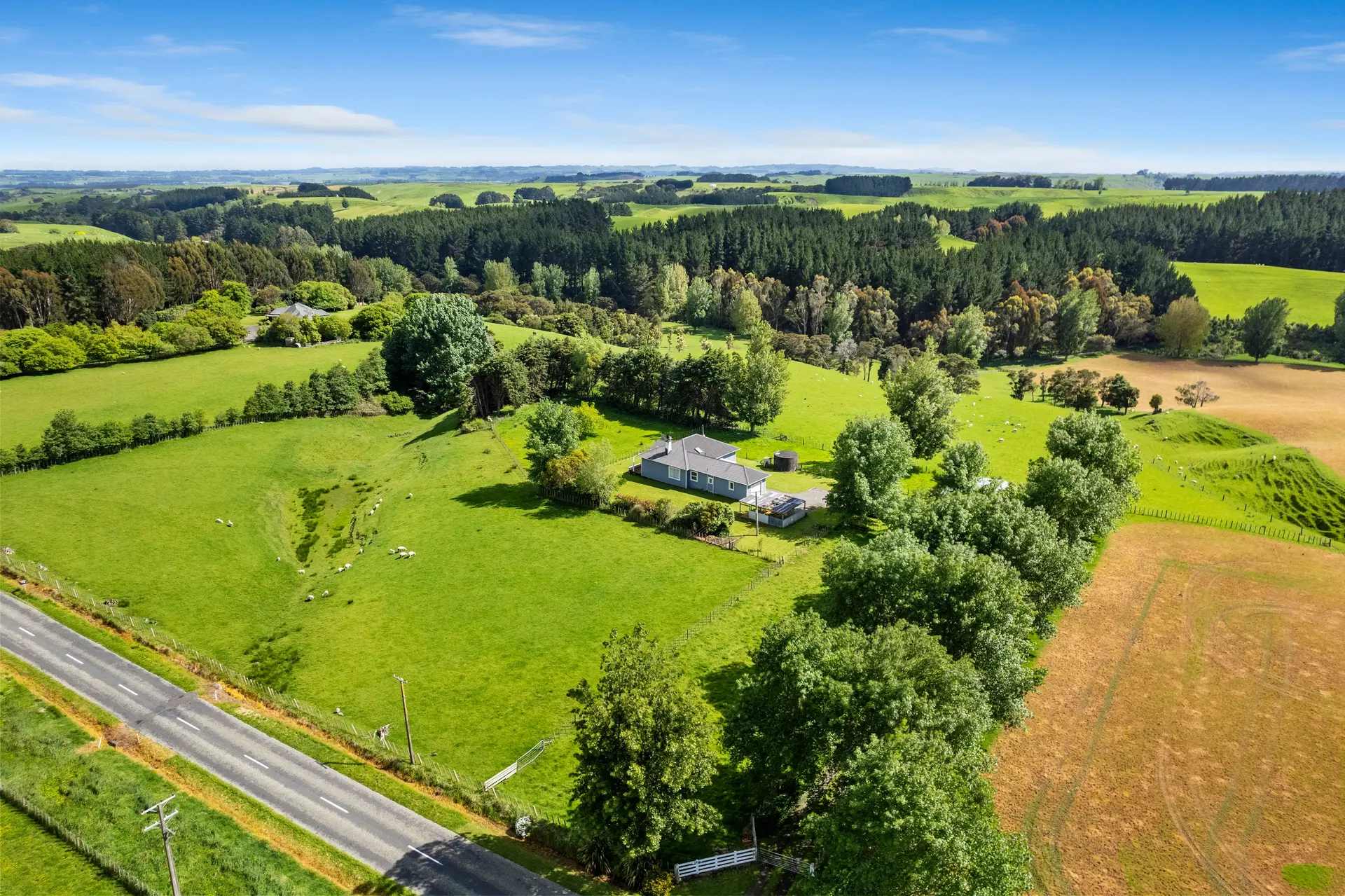
More than fifteen years ago, Valérie went looking for answers.
She had been dealing with ongoing health issues and arranged hair testing through Allergenics to explore possible sensitivities and exposures. The results raised an unexpected question — why was a glyphosate-based weedkiller showing up in the results at all?
The report itself referenced Roundup, a commonly used glyphosate-based herbicide. What made it difficult to reconcile was this: it wasn’t being used on her property.
So where was it coming from?

At the time, her household water supply came from a bore drawing groundwater from the surrounding area. That supply wasn’t isolated — it formed part of a wider system servicing the Halcombe community and properties along Stanway Road. Not far from their home, a large water tank sat on a nearby hill, connected to that same groundwater source.
In the surrounding area, land use was changing. Burn-offs and mechanical methods were being replaced with chemical spraying — entire paddocks treated at once.
What Was Happening Around Them
From where she was standing, it wasn’t just the spraying itself that stood out. It was what followed.
In nearby paddocks, livestock were sometimes allowed to graze on pasture that had been recently sprayed before being turned over. Along the rural roadsides, the local council carried out periodic spraying to suppress grass growth. In summer, that created another interaction point — once those verges had been treated, temporary fencing (Waratahs and wire) was used to allow cattle to graze the roadside grass.
These weren’t isolated events. They were part of the rhythm of how land was being managed.
Valérie recalls raising concerns about roadside spraying with the local council. The response she received pointed to cost — that it was the most efficient way to manage vegetation.
Individually, each of these practices might be considered routine. Taken together, they start to raise a different kind of question:
What actually happens to these chemicals once they leave the spray nozzle?
Do they remain where they’re applied?
Or do they move — through soil, into groundwater, onto pasture, and eventually into the wider food chain?
When Questions Become Personal
For Valérie, those questions became personal.
Concern about groundwater exposure — and the cumulative effect of repeated spraying across nearby land — ultimately contributed to the decision to move away.
Even the process of selling the property brought something else into focus.
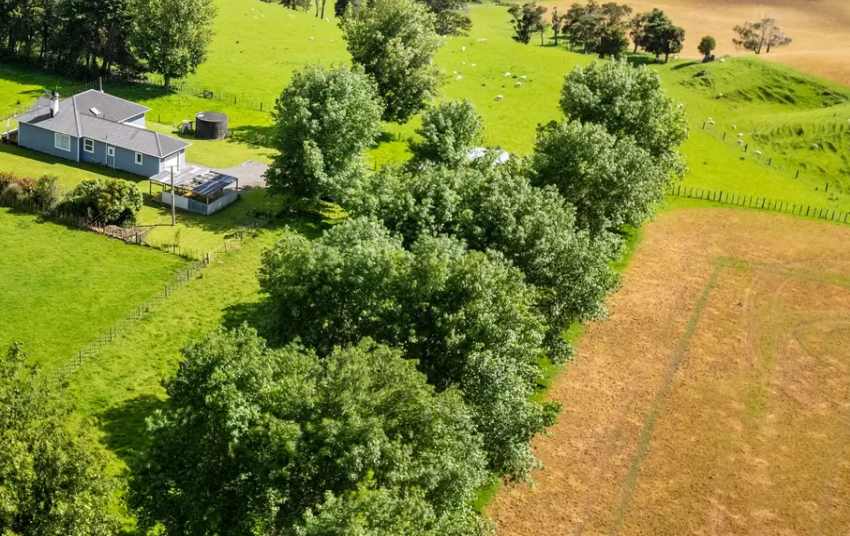
The month before the property was listed, the neighbouring farmer sprayed the paddock along the boundary with glyphosate. In the real estate photos, the contrast is clear — the treated area visibly browned compared to the surrounding landscape.
It raised a quieter question:
What do we assume we’re buying into when we purchase food… or land… or even just a place to live?
And how much of that picture is shaped by practices happening just beyond the boundary line?
Looking at the Bigger Picture
This isn’t a controlled study. It doesn’t attempt to draw definitive conclusions.
But it does point to something that’s often missing from the conversation — how multiple, everyday exposure pathways can overlap in ways that aren’t always obvious.
Food. Water. Soil. Roadside spraying. Grazing practices.
Not in isolation, but all at once.
And perhaps the more important question that follows:
If this is considered standard practice in some areas, how often are we looking closely enough to understand the full picture?
Valérie’s experience reflects something we’re hearing more often — not as a single, isolated source of exposure, but as a combination of everyday interactions with land, water, and food systems. While each situation is different, these accounts add an important layer to the wider conversation. They remind us that how exposure happens isn’t always obvious.
If you’ve seen similar practices or have a story to share, we’d be interested to hear from you. Every perspective helps build a clearer picture.
Disclaimer: Inclusion of testing providers or health practitioners in personal stories on this site does not constitute an endorsement by No More Glyphosate NZ. We aim to faithfully share people’s lived experiences while remaining neutral about individual services, which we have not independently reviewed.