If you’ve heard whispers about Icafolin, Bayer’s upcoming herbicide touted as a “fresh mode of action”, you’re not alone.
It’s being framed—as these things often are—as a potential glyphosate alternative. That phrasing alone should make us pause for a moment. Alternative in what sense? Safer? Better? Or simply new?
Icafolin-methyl (the active ingredient) is part of Bayer’s long-term strategy to introduce the first new herbicide mode of action in decades, with a targeted rollout around 2028. And yes, the marketing engines are already warming up.
But before the hype carries us away, it’s worth asking:
What is Icafolin really? And what does it mean for New Zealand’s growers, consumers, and environments already exhausted by chemical creep?
What Exactly Is Icafolin?
Icafolin-methyl sits within a completely new chemical class called benzoylpyrazoles. These herbicides work by inhibiting plastidic homomeric ACCase — a plant enzyme involved in key cellular processes. In simple terms, Icafolin interferes with a plant’s ability to function at the cellular level, which ultimately kills it.
Part of the excitement around Icafolin is its novelty. It isn’t an ALS inhibitor (ALS being the enzyme acetolactate synthase, which many older herbicides target), it isn’t a glyphosate mimic, and it isn’t part of the well-worn herbicide groups already driving widespread resistance issues. For an industry hungry for “new solutions,” that alone makes Icafolin look promising.
But novelty isn’t the same as safety.
Or effectiveness.
Or long-term sustainability.
Bayer’s Pitch: “A New Mode of Action”
The messaging around Icafolin focuses heavily on resistance management. Herbicide resistance is a global problem, including here in New Zealand, and a new mode of action sounds like a perfect solution on paper.
But this is where the conversation often drifts into convenient oversimplifications. When glyphosate was introduced, it too was hailed as the answer to resistance and environmental impact. Decades later, we know how that story turned out.
So when an agrichemical giant frames something as “the next big solution,” it’s only natural to ask: Solution for whom? Your crops—or their bottom line?
Is Icafolin Really a Glyphosate Alternative?
And this is where the marketing gets interesting, because one phrase keeps appearing again and again in the Icafolin narrative — “glyphosate alternative.” But what does that actually mean?
Let’s address the million-dollar phrase head-on.
Is Icafolin a safer, cleaner, non-toxic replacement for glyphosate?
No one can say that—not honestly, and not yet.
Here’s what we do know — not from marketing, but from what’s been published so far:
- Icafolin is not structurally related to glyphosate.
- It is not a like-for-like substitute for public use, gardens, or home spraying.
- It is intended for broadacre agriculture, not driveways or playgrounds.
- Its safety profile is still largely unknown.
- Its environmental breakdown depends heavily on soil and climate conditions.
The narrative that Icafolin is a “replacement” is more marketing than reality.
It plugs a commercial gap, not necessarily a health or environmental one.
And for those of us in New Zealand worried about glyphosate residues in food and water, the question becomes:
Are we solving a problem—or just swapping one herbicide for another, with unknown long-term effects?
What We Know So Far from Early Research
Early studies on Icafolin are limited, and the picture they paint is far from complete.
In one soil metabolism study, roughly half of Icafolin broke down within 35 days, mostly into CO₂. That sounds promising — but the study was carried out under ideal, controlled conditions. Real soils are messy. Weather is unpredictable. Application is never uniform. Chemical behaviour in the real world rarely mirrors what happens in the lab.
Beyond that, the gaps are striking:
- Long-term ecotoxicity data is still thin.
- There are no published endocrine, microbiome, or human exposure studies.
- Regulatory reviews to date have assessed only the active ingredient, not the full commercial formulation that would be used in the field.
If this feels familiar, it should.
This is exactly how glyphosate entered the world in the 1970s — with early lab studies that looked tidy, reassuring, and incomplete.
How Does Icafolin Work?
Icafolin doesn’t behave anything like glyphosate. Instead of shutting down the shikimate pathway, it targets a completely different part of plant biology — the fatty-acid production line.
Icafolin works by blocking ACC (Acetyl-CoA Carboxylase), an enzyme plants need to produce essential fatty acids, which are necessary for cell structure and growth. When that process stops, the plant can’t maintain its cell membranes, can’t rebuild itself, and ultimately collapses.
On paper, that counts as a “new mode of action,” and Bayer knows how powerful that phrase sounds in a market desperate for novelty. But new doesn’t automatically translate to safer, cleaner, or low-risk. It just means Icafolin disrupts plant biology in a different way than the herbicides we already know — and already struggle with.
What Does Icafolin Mean for New Zealand?
While Icafolin is still years from New Zealand stores, several implications are already emerging:
- Regulatory pressure: NZ is slow to approve new herbicides. Icafolin will undergo EPA scrutiny—but remember, only the active ingredient is assessed, not the full product formulation.
- Market positioning: Expect industry groups to frame Icafolin as “safer” or “reduced-risk” despite limited data.
- Agricultural uptake: If approved, it will likely be integrated into crop rotations to “manage resistance” rather than reduce chemical use.
- Residues: No one can yet say what residues might appear in NZ food—because there is no MRL (Maximum Residue Limit) and no studies.
For a country already grappling with glyphosate residues in honey, cereals, bread, and waterways…
adding yet another herbicide isn’t a minor decision.
Fast Facts: Icafolin at a Glance
- Chemical class: Benzoylpyrazole herbicide
- Active ingredient: Icafolin-methyl
- Mode of action: Plastidic homomeric ACCase inhibition
- Designed for: Resistance management in broadacre cropping
- Projected rollout: ~2028
- Regulatory status: Not yet approved in NZ
- Framed as: A potential glyphosate alternative
- Safety data: Limited, early-stage, not comprehensive
What’s Missing from the Conversation?
We’re not hearing much about:
- Impacts on soil organisms
- Effects on aquatic ecosystems
- Chronic exposure
- Metabolites beyond CO₂
- Interactions with commercial formulations
- Risks to workers and contractors
- Long-term human health data
These gaps matter.
New chemicals often look clean on paper—until they don’t.
So Is Icafolin the Future? Or Just the Next Chapter?
Herbicides don’t operate in a vacuum.
When one loses effectiveness or social licence, another steps in.
Glyphosate replaced atrazine.
Glufosinate replaced glyphosate in some regions.
Now Icafolin may be lining up to replace glyphosate.
But unless we address the bigger issue—our reliance on chemical weed control—we’re just rearranging the deckchairs.
Icafolin might be new.
But the pattern is anything but.
FAQ: Icafolin & Glyphosate Alternatives
What is Icafolin?
Icafolin-methyl is a new benzoylpyrazole herbicide under development by Bayer, expected for release around 2028.
Is Icafolin a glyphosate alternative?
It’s marketed as one, but it is not a like-for-like substitute and has not been proven safer.
Is Icafolin safer than glyphosate?
There is no long-term safety data yet to support this claim.
When will Icafolin be available in New Zealand?
Not for several years, pending EPA approval and regional trials.
What crops will it be used on?
Broadacre agricultural crops—not home gardens or public areas.
Will Icafolin replace Roundup?
It may replace glyphosate in some commercial contexts, but not for everyday consumer use.
This article is part of a mini-series exploring what’s replacing glyphosate—and why it might not be the revolution we’re being sold.
- Part 1: You are here — Icafolin: The New Glyphosate Alternative or More of the Same?
- Part 2: The Desiccation Dilemma: Why Glyphosate’s Real Role Is Hard to Replace
- Part 3: The Risks We’re Not Talking About Yet
- Part 4: What Happens After Glyphosate? A System Under Scrutiny
Further Reading:
Icafolin is being sold as a breakthrough—but who’s doing the selling, and what’s missing from the story? The resources below help cut through the marketing gloss and dig into the science, the strategy, and the stakes.
Bayer Submits Registration Applications for Novel Herbicide
CropLife, July 2025
Industry announcement detailing Bayer’s launch plan for Icafolin‑methyl, including target crops, mode of action, and market rollout timeline.
Icafolin: An Alternative to Glyphosate
EFA News, July 2025
European agri-food news coverage exploring Bayer’s positioning of Icafolin as a glyphosate alternative and its sustainability claims.
The Novel Herbicide Icafolin-Methyl Is a Plant-Specific Inhibitor of Tubulin Polymerization
ResearchGate, June 2024
Peer-reviewed study explaining how Icafolin selectively disrupts plant tubulin—without affecting mammalian cells—making it a unique herbicide mechanism.
Soil Degradation and Mineralization Study of Icafolin-Methyl
SSRN Preprint, March 2024
Preliminary environmental fate study showing rapid degradation of Icafolin in aerobic soils and minimal long-term residue risk.
Bayer Herbicide Icafolin-Methyl Poised to Transform Global Agriculture
ChemAnalyst, July 2025
Highlights Bayer’s sales expectations, target crops, and rationale for Icafolin’s introduction in light of resistance issues.
Pesticide Properties Database: Icafolin-Methyl
University of Hertfordshire
Public data page listing chemical properties, degradation rates, and regulatory identifiers for Icafolin-Methyl.
Bayer Advances Registration for Icafolin in Four Major Markets
Fruitnet, July 2025
Covers the same regulatory launch but adds details on Bayer’s digital discovery tools and projected rollout strategy.
This is just the beginning. As more data emerges—and more countries weigh approval—we’ll continue tracking Icafolin’s impact. Because every new “solution” deserves scrutiny, especially when it comes wrapped in promises of progress.
Image Source & Attribution
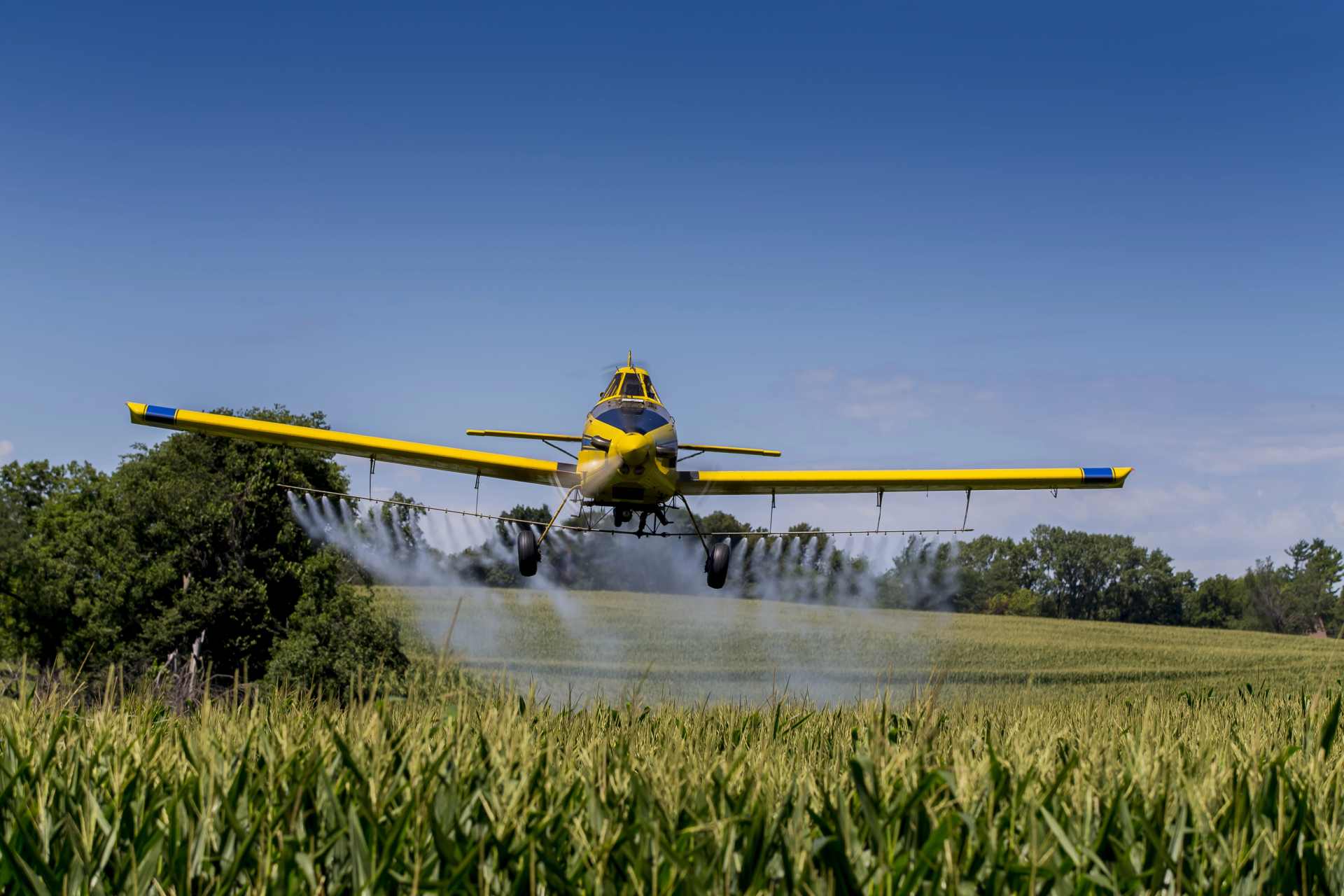
We’re grateful to the talented photographers and designers whose work enhances our content. The feature image on this page is by actionsports.