What Whangārei District Council’s Glyphosate Review Reveals About Roadside Spraying Controls
Glyphosate has long been used as a routine tool for roadside and park maintenance across New Zealand. In Whangārei, as in many districts, its use has increasingly come under public scrutiny — not only because of ongoing scientific debate about health and environmental effects, but because of how spraying is carried out in shared public spaces.
In 2025, Whangārei District Council (WDC) undertook a formal review of glyphosate use by its contractors. The review was prompted by sustained public concern, incorporated into the Long Term Plan process, and informed in part by a past roadside spraying complaint on Mill Road.
What followed was not a decision to ban glyphosate, but a set of recommendations aimed at improving safety and public confidence. What matters — and what is rarely visible to the public — is which of those recommendations became enforceable requirements, and which did not.
Why Council Reviewed Glyphosate Use
In a July 2025 briefing to elected members, WDC acknowledged that glyphosate has been subject to prolonged public scrutiny due to health concerns and potential environmental impacts such as spray drift and runoff.
While glyphosate remains approved for use by the New Zealand Environmental Protection Authority (EPA), Council noted that adverse effects are most likely when poor application practices occur — indicating an opportunity to improve public perception and risk management through stronger health and safety controls.
The review focused heavily on roadside spraying but also extended to parks and other council-managed areas. It examined cost, health, and environmental considerations, and compared Whangārei’s approach with that of other councils across New Zealand.
The Mill Road Complaint: Context, Not Conclusion
As part of that wider review, Council referenced a roadside spraying complaint received in October 2021 relating to Mill Road (more about this below). Due to the seriousness of the allegation, Council commissioned an independent investigation.
In its 2025 briefing, Council summarised the outcome cautiously, stating that while a direct spray could not be confirmed, there existed a possibility that overspray may have occurred.
The Mill Road incident matters not because of blame, but because it prompted closer examination of whether existing safeguards are adequate when spraying occurs near pedestrians and other members of the public.
What the Review Recommended
The glyphosate use review identified several additional measures that could be adopted to improve public health and environmental protection if glyphosate use were to continue. These included:
- Compensating contractors for standby time when spraying must pause due to pedestrians or animals being present.
- Defining a minimum upwind spraying distance from people or animals.
- Specifying a maximum spray height above ground to reduce drift.
- Limiting the proportion of very fine droplets (under 100 microns), which contribute disproportionately to spray drift.
- Extending the duration that warning signage remains in place after spraying in parks.
- Avoiding glyphosate use where drainage structures feed directly into receiving aquatic ecosystems such as streams, wetlands, ponds, or lakes.
On paper, these recommendations reflect a more precautionary approach. The next question is how many were actually adopted.
What Changed — and What Didn’t
Internal council correspondence following the review provides a point-by-point account of how these recommendations translated into operational practice.
Safety pauses and contractor incentives
The review recommended compensating contractors when spraying must pause for safety reasons, such as pedestrians using a footpath.
Council confirmed that this was not included in contracts, describing it as difficult to administer in practice. As a result, safety stoppages remain unfunded, meaning decisions to pause work rely on discretion rather than contractual design.
Minimum distance from people
The review suggested specifying a minimum upwind spraying distance of 10 metres.
Council noted that the contractor’s internal Standard Operating Procedures include a 15-metre stoppage requirement. However, this distance is not written into Council’s contract specification, meaning enforcement depends on contractor practice rather than a formal contractual obligation.
Spray height limits
The review proposed defining a maximum spray height to reduce drift.
Council confirmed there is no contractual requirement specifying spray height. Height is described as variable depending on vegetation, road furniture, and berm curvature. Contractors reported typical spray heights between 300 and 500 millimetres.
The risk is acknowledged, but the control remains informal.
Droplet size and spray drift
Fine droplets are widely recognised as a major contributor to spray drift. The review suggested limiting droplets under 100 microns to less than 10 percent.
Council confirmed there is no specification for droplet size. Instead, contracts rely on low-pressure application requirements and a general obligation that contractors must “prevent chemical drift.”
Contractors state that their equipment produces very low levels of fine spray droplets that can drift, but there is no contractual requirement for independent verification or routine auditing.
Signage and public notification
The review suggested extending the time warning signage remains in parks after spraying.
Council correspondence indicates no specific contractual change, with notification practices varying between contractors and some reliance on newspaper notices. A consistent, enforceable standard has not yet been confirmed.
Aquatic environments: a recommendation not adopted
As part of the review, the reviewer recommended that glyphosate not be used in areas where drainage structures feed into receiving aquatic ecosystems, due to known environmental risks.
Whangārei District Council did not adopt this recommendation. In internal correspondence, Council stated it was “completely at odds” with this position and instead relied on existing contract provisions that permit glyphosate use in these environments under current controls.
This was a deliberate policy decision, not an oversight, and highlights how environmental risk is weighed against operational and cost considerations.
“Reasonable Care” — Conditional by Design
The review concluded that there was currently reasonable consideration for public health and safety in herbicide application based on the EPA’s existing stance on glyphosate. Crucially, it also noted that if the EPA’s position were to change, the adequacy of current safeguards would require re-evaluation.
In other words, what constitutes “reasonable care” was explicitly tied to regulatory assumptions that were never presented as permanent or immune to revision.
Why That Caveat Matters More Now
Since the Whangārei review was completed, new developments have added weight to that caution.
A cornerstone glyphosate toxicity study — relied upon internationally by regulators for decades — has recently been formally retracted after evidence emerged that it was ghostwritten by Monsanto rather than independently authored.
This does not, on its own, resolve the broader scientific debate around glyphosate. However, it does raise serious questions about how regulatory confidence in glyphosate safety was constructed, and how heavily certain studies were relied upon in shaping that confidence.
For councils, this matters because risk assessments are only as robust as the evidence they rest on. In that context, the review’s acknowledgement that existing safeguards may need reassessment if regulatory assumptions change now appears less hypothetical and more timely.
What This Reveals About Glyphosate Governance in Whangārei
Council’s own documents show a consistent pattern:
- Risks are acknowledged.
- Improvements are identified.
- Many controls remain informal, discretionary, or contractor-defined rather than contractual and auditable.
Glyphosate remains the most cost-effective weed control option, and Council has been transparent about financial constraints. But cost-effectiveness carries trade-offs — particularly when public safety relies on practices that are encouraged rather than required.
Where This Leaves Residents
This is not a story about banning glyphosate overnight. Nor is it about assigning blame for past incidents.
It is about transparency.
When residents walk on footpaths, use parks, or live near sprayed roadsides, they reasonably assume that clear, enforceable safety standards are in place — and that those standards are consistent, monitored, and responsive to evolving evidence.
Whangārei District Council’s own review shows that while safeguards exist, many are not embedded in contracts in a way that guarantees uniform application.
Understanding that distinction matters.
Closing note
Critical thinking starts with asking better questions. In this case, the question is not whether glyphosate is legal — it is whether the protections people assume exist are written into the systems that govern everyday spraying in public spaces, and whether those systems are prepared to adapt when the evidence landscape shifts.
Further Reading
Investigation of the Mill Rd spraying incident
Official Information Request
This page on FYI.org.nz shows a Local Government Official Information Act (LGOIMA) request submitted to Whangārei District Council about the Mill Road spraying incident of October 2021, the council’s acknowledgement of the request, and subsequent correspondence between the Northland Toxin Awareness Group and council staff about the investigation process and status of the independent report. It provides useful background on how the incident moved from witness complaint to formal investigation.
https://fyi.org.nz/request/21533-investigation-of-mill-rd-spraying-incident-of-oct-2021-initiated-by-nta-manager-calvin-thomas-wdc
Context note: The Mill Road incident was originally raised by the Northland Toxin Awareness Group. No More Glyphosate NZ is independent of that group and has reviewed the matter using council documents released under LGOIMA.
Retraction of key herbicide study won’t sway government’s approach
Radio New Zealand (RNZ)
This RNZ article reports on the recent retraction of a long-relied-upon glyphosate toxicity study after evidence emerged that it was ghostwritten by Monsanto. While the New Zealand government indicated the retraction would not immediately change its regulatory position, the coverage highlights how assumptions underpinning glyphosate safety assessments are being publicly scrutinised and debated within New Zealand.
https://www.rnz.co.nz/news/political/582254/retraction-of-key-herbicide-study-won-t-sway-the-government-s-approach
Glyphosate call-for-information: Summary report (2022)
New Zealand Environmental Protection Authority (EPA)
This EPA summary report outlines submissions received from the public, industry, and other stakeholders during New Zealand’s call for information on glyphosate. It provides insight into the EPA’s regulatory framework, the range of concerns raised about glyphosate use, and how differing scientific and public perspectives are considered within New Zealand’s hazard management processes.
https://www.epa.govt.nz/assets/Uploads/Documents/Hazardous-Substances/Glyphosate-call-for-information/Glyphosate-call-for-information-summary-report-may22.pdf
EPA Glyphosate Rules and Regulation — Hazardous Substance Guidance
New Zealand Environmental Protection Authority (EPA)
This official EPA guidance outlines how glyphosate is regulated in Aotearoa New Zealand under the Hazardous Substances and New Organisms (HSNO) Act. It explains that glyphosate-containing products must be approved before they can be sold or used, that potential impacts on human health and the environment are weighed before approval, and that controls (such as labelling, packaging, and use restrictions) are applied to reduce risks. It provides a foundation for understanding the statutory framework within which councils and contractors operate.
https://www.epa.govt.nz/hazardous-substances/rules-notices-and-how-to-comply/specific-substance-guidance/glyphosate
Ngunguru’s Henry Bedell raises concerns over council herbicide spraying
Northern Advocate / NZ Herald
This local news report describes how a Year 8 student from Ngunguru presented safety concerns to Whangārei District Council about herbicide weed spraying near his school, including timing and signage. The article highlights community perspectives on spray-related risks and how the council responded with changes to notification practices.
https://www.nzherald.co.nz/northern-advocate/news/ngungurus-henry-bedell-raisies-concerns-over-councils-herbicide-spray-out-side-school/
Image Source & Attribution
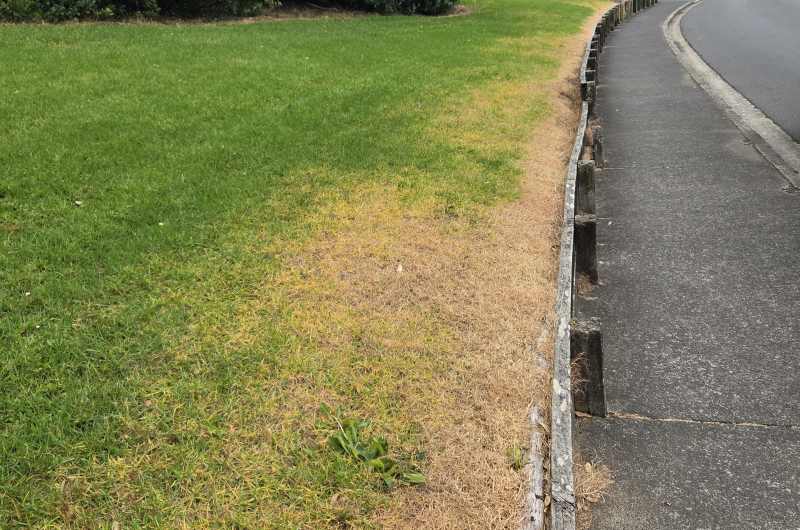
The feature image on this page was provided by No More Glyphosate NZ.